Translate

Monday, November 10, 2014

The new SailTimer Wind Instrument™


The new SailTimer Wind Instrument™

A lot of people have been writing in, wondering when they will be able to order the next-generation SailTimer Wind Instrument™.  We haven't wanted to release product information on this innovative new design prematurely.  But SailTimer Inc. is now preparing to announce the product specifications and pre-ordering for the new version of its wireless, solar-powered anemometer in the coming weeks. The new SailTimer Wind Instrument™ is a complete redesign of the previous version. This R&D resulted in innovative new features and a lower price for this advanced technology.
This is the first masthead anemometer designed for sailboats:  when your boat heels over, the spinning blades on the new Wind Instrument are unaffected, and maintain equal accuracy.  That is a pretty important innovation for sailors.  Traditional cup, ultrasonic and propeller anemometers were all designed to be used upright, not on a heeling sailboat.  They all respond less when the boat heels over and the wind approaches them from underneath.  But the new SailTimer Wind Instrument™ has a patented blade design. These blades have an amazing property:  they work like wind cups when the boat is upright, but like a propeller when the boat is heeled over.  That gives you consistent accuracy regardless of the boat's heel. 
Here's a sneak preview:

This new SailTimer Wind Instrument™ will be available for pre-order for US $350 online, and will later retail for $449.99. 
You can get more information at SailTimerWind.com, but here is a brief list of some of the new innovations and features:  solar-powered, wireless (so no wiring to install down the mast and through the boat), submersible, small enough for sailboats of all sizes.  This is the only masthead anemometer in the world that can transmit wind speed & direction through the air to smartphones and tablets.  As you'll see on the web site, it also uses the NMEA0183 format, to work with many different apps, and has an optional receiver that plugs in to onboard NMEA0183 networks.
The company has been working hard to have the Wind Instrument available soon, and hopes to announce preordering in early December. That depends on logistics in the supply chain. Further updates in the coming weeks.


SailTimer™ iOS app:
See your optimal tacks

There are lots of map viewers, but this is the only app that calculates your tacking distances and times, and displays your optimal tacks as a chart overlay. The app is low cost, and includes free aerial photos and land maps worldwide.  Plus low-cost hydrographic charts for USA, UK, New Zealand, Canada, Puero Rico and US Virgin Islands.


Sunday, November 9, 2014

Porsche 356 Silver Bullet Hot Rod is hot

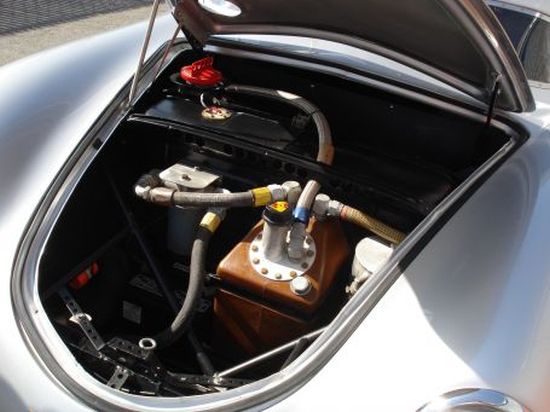
Porsche 356 Silver Bullet Hot Rod is hot, really hotPorsche 356 Silver Bullet Hot Rod 16

Porsche 356 Silver Bullet Hot Rod 16Silver Bullet Hot Rod makeover.
Porsche 356 Silver Bullet Hot Rod 6Porsche 356 Silver Bullet Hot Rod 14Porsche 356 Silver Bullet Hot Rod 9
Via: Fantasyjunction / WCF

Hot rods are hot, really hot, not because of the huge smoke they belch or for that matter, the rubber they burn on road but for some peculiar traits and lots of efforts put in their building. What if it’s a Porsche? It’s like asking lots of fans to drool over it like kids. Well, here is a similar creation that you just can’t help but appreciate.

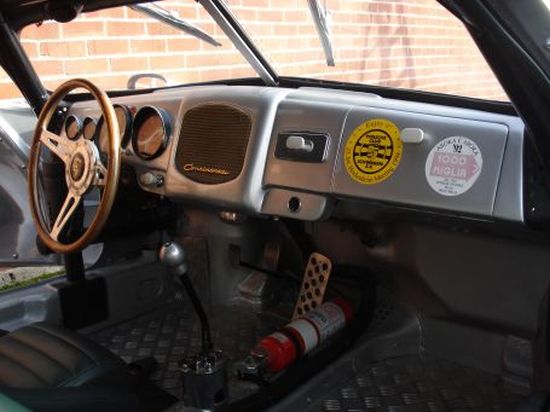
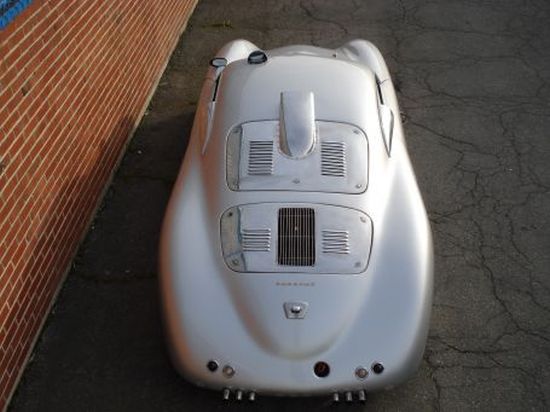
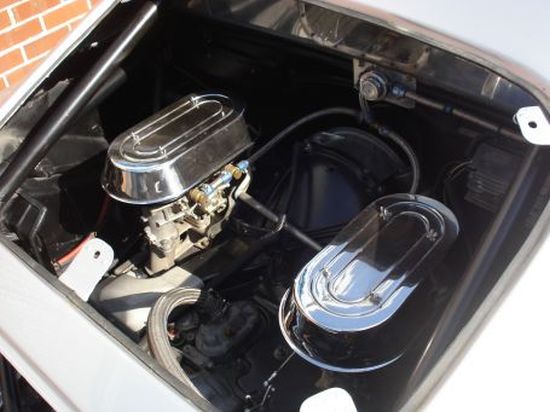
Created by Jeff Dutton in 1992 in Australia, the Porsche 356 Silver Bullet Hot Rod combines traits from various Porsche cars like it’s based on a 914-6 chassis and its body on 1955 356 Continental Coupe. Powering the beast is a mid mounted RS-spec 3.0-liter 911 engine that develops a cool 279hp. The Porsche hot rod also features Weber carburetors, engine is aligned with a five speed 915 gearbox and 934-sourced ventilated and drilled discs bring it to a halt.Silver Bullet Hot Rod makeover.
Via: Fantasyjunction / WCF
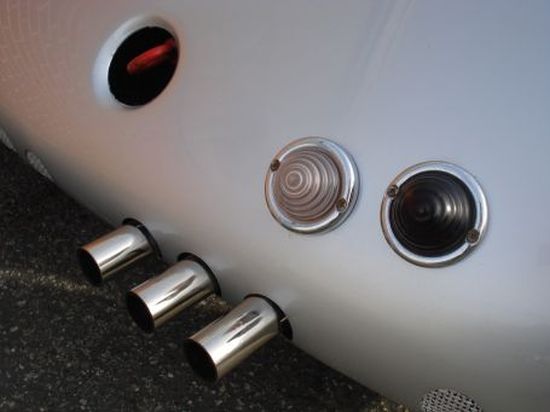
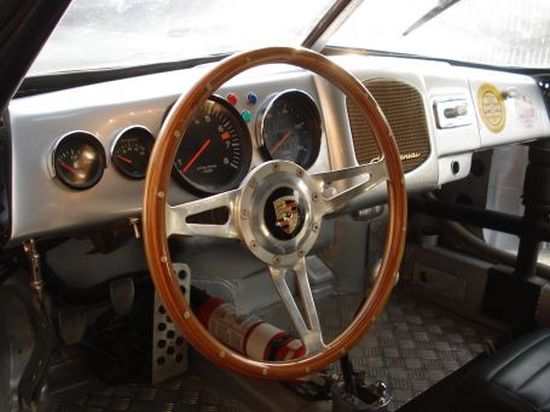
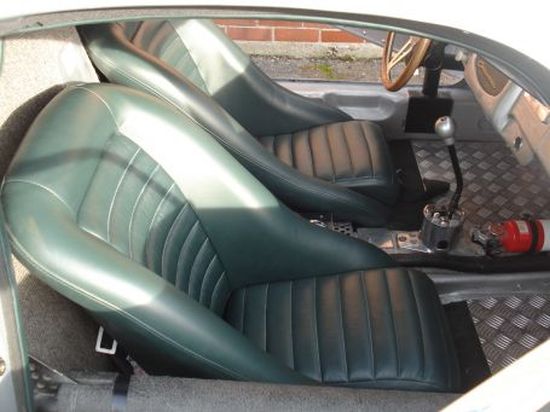
The roof of the car is chopped and it has a longer wheelbase than 356 Continental Coupe. Other noticeable features include 17 inches wheels, 718 RSK-style side vents, side mirror and engine access covers. While inside one can find bucket seats wrapped in green leather, wood trim for steering wheel, VDO instrumentation, beehive tail lamps from 1955 Continental coupe and some of the details are taken form Porsche 911. Additionally, Plexiglas made side window and windscreen completes the Porsche 356 Silver Bullet Hot Rod makeover.Silver Bullet Hot Rod makeover.
Porsche 356 Silver Bullet Hot Rod 12Porsche 356 Silver Bullet Hot Rod 5Porsche 356 Silver Bullet Hot Rod 10
Porsche 356 Silver Bullet Hot Rod 11Porsche 356 Silver Bullet Hot Rod 2Porsche 356 Silver Bullet Hot Rod 8
Via: Fantasyjunction / WCF

JUEZ APRISTA PRETENDE ARCHIVAR EL CASO DE LA MEGACOMISION

09 de Noviembre del 2014

Extrañas movidas de juez Jesús Manuel Soller en caso García vs. Megacomisión


Cuestionado magistrado con vínculos apristas vuelve a actuar en pared con los abogados de Alan 
Por Lilia Ramírez
Abogada del Instituto de Defensa Legal (Justicia Viva)
El 7de noviembre de 2014 se iba a llevar a cabo la última vista de la causa del proceso que entabló Alan García contra el trabajo de la Megacomisión. Después de este paso soloquedaba la emisión de la resolución final. Sin embargo, esta audiencia no se llevó a cabo por decisión de Jesús Manuel Soller, presidente de la Primera Sala Civil de Lima, instancia a cargo de esta emblemática causa.
La razón de la suspensión es que los abogados de Alan García Pérez, Wilber Medina y Genaro Vélez, presentaron ese mismo día un escrito de recusación contra el juez ponente de la causa: Gunther Gonzales Barrón. Pese a que, por costumbre judicial, esta no es razón para suspender la causa, el solícito presidente de la sala, Soller, señaló que la audiencia se suspendía hasta resolver este pedido.
Pedido de recusación
Los abogados de Alan García presentaron el escrito de recusación pese a que se sabe que el doctor Gonzales Barrón conoce la causa desde el 27 de diciembre de2013, fecha en que dictaron una primera sentencia en este proceso.
Llama la atención que se haya suspendido la audiencia ante un pedido tan irracional que debe ser rechazado de plano. De acuerdo al artículo 52° del Código Procesal Constitucional, la figura de la recusación no existe dentro de un proceso de amparo. Soloexiste la “abstención por decoro”, solicitud que hizo el Congreso en su momento contra el juez Jesús Manuel Soller por sus nexos con el demandante Alan García Pérez,la cual, pese a todos los indicios en contra, fue rechazada.
La única razón por la que los abogados de Alan García Pérez quieren apartar a este juez responde al temor que se tiene de que vuelva a discrepar, especialmente con Soller, como se vio en su anterior voto singular (Resolución N°1066, página 45 y siguientes).
Este hecho netamente jurídico y que no guarda relación alguna con presuntas cercanías o animadversiones a las partes, como sí sucede con el vocal Soller, no es ningún obstáculo para que el juez Gonzales siga conociendo el proceso. Si fuera cierto el argumento de los abogados de García, todos los jueces de la Primera Sala Civil deberían dejar de conocer la causa porque todos ya dieron argumentos a favor o en contra de las partes en diversos momentos del desarrollo del proceso.
Pero esto no es así. La razón por la cual los mismos jueces deben seguir conociendo todos los actuados de un caso, así ya hayan emitido diversas resoluciones en torno al mismo, es para darle celeridad y predictibilidad a las causas. Por eso, en los casos civiles y constitucionales, se prefiere que sean los mismos magistrados los que tengan competencia en los procesos, pues se busca que estén siempre empapados de la materia que se tratará.
Intentando retirar al juez Gunther Gonzales Barrón del proceso 
Pero lo que resulta más extraño de las dilaciones que se producen en esta causa–todas, pareciera, encaminadas a retirar al juez Gonzales Barrón del proceso– es la actitud del presidente de la sala, Jesús Manuel Soller.
En setiembre de este año, la Primera Sala Civil, en un hecho por demás extraño, programó la vista de esta causa en el momento en el cual el doctor Gonzales Barrón se encontraba de licencia por un viaje académico. De acuerdo a la información que hemos obtenido, la licencia de estehabía sido solicitada desde el 29 de agosto y duraba del 22 al 26 de setiembre; la Resolución Administrativa N°270-2014-P-CSJLI/PJ, que daba cuenta de la licencia, se emitió el 19 de setiembre y se hizo pública el 20; empero, pese a ello, el lunes 22 de ese mes la sala acuerda realizar la audiencia el 26 de setiembre, es decir, dentro de la licencia del doctor Gonzales Barrón.
De acuerdo a ley, si un juez no está en la vista de la causa, no puede emitir resolución y otro juez debe reemplazarlo. Es decir, si se realizaba la audiencia, Gonzales Barrón estaba fuera del proceso.
Ya es una norma que se aplica en todo el Poder Judicial que el encargado de proponer la fecha de las audiencias es el presidente de la sala. Cuando le preguntamos al magistrado Tapia Rodríguez, otro vocal integrante de la sala, qué era lo que había ocurrido, sorprendentemente él nos señaló que no sabía lo que había pasado. El doctor Gonzales Barrón también nos indicó lo mismo, pues estaba de viaje. Pero este último nos dejó claro que estaba seguro de que para la fecha de su licencia él sabía que no tenía audiencias en esta causa.
Sin duda, esta programación resultaba siendo una grave irregularidad que pesaba sobre el presidente de la sala, Soller.
Pero, felizmente, esta situación no se produjo, dado que, por el apuro, Soller no se dio cuenta de que infringía plazos legales mínimos. Debido a ello, el Congreso pidió la postergación de la misma, pues acusaba a la sala de afectar el debido proceso al emitir una notificación para una fecha tan cercana. Ante este hecho, la sala no tuvo más que modificar la fecha, y ya no lo hizo con la inicial celeridad del caso, sino para anteayer 7 de noviembre.
Ahora, el juez Jesús Manuel Soller vuelve a actuar en pared con los abogados de Alan García al suspender la causa por un risible pedido de recusación contra el doctor Gunther Gonzales Barrón.
Ante esto, denunciamos los extraños manejos que vienen ocurriendo en este proceso. Las relaciones del juez Jesús Manuel Soller con el partido de la estrella y con el propio Alan García no son garantía de independencia e imparcialidad, y lo ocurrido en setiembre y anteayer mismo con la suspensión de la audiencia son una muestra adicional de ello.


Tubino: “Recusación a juez en caso García evidencia preocupación del APRA”Advierten que fallo no será favorable a expresidente, dice fujimorista

Tubino: “Recusación a juez en caso García evidencia preocupación del APRA”
Advierten que fallo no será favorable a expresidente, dice fujimorista
El congresista de Fuerza Popular Carlos Tubino afirmó que la recusación que la defensa del expresidente Alan García presentó contra uno de los jueces que resolverá la acción de amparo referida a los informes de la Megacomisión evidencia “una preocupación del Partido Aprista Peruano sobre el futuro del proceso”.
“Seguramente han advertido que la resolución que iba a emitir la sala no iba a ser favorable a Alan García, entonces, lógicamente, presentaron el recurso de recusación”, señaló el parlamentario en declaraciones a la agencia Andina.
Dijo esperar que, pese al pedido de la defensa de García Pérez, el Poder Judicial falle a favor del recurso presentado por el Congreso de la República, para que tengan validez los informes del grupo de trabajo en lo que respecta al líder aprista.
“Confío en que el Poder Judicial tome decisiones que favorezcan a los derechos de la Megacomisión. Todos los casos investigados por este grupo de trabajo deben ser vistos en el Pleno del Congreso”, añadió.
En la víspera, los abogados del expresidente García recusaron al juez Gunther Gonzales Barrón, quien debía resolver la acción de amparo contra la resolución judicial que excluyó meses atrás al expresidente García de las investigaciones de la denominada “Megacomisión”.
Cabe recordar que la Megacomisión del Congreso investigó el segundo gobierno de Alan García y encontró indicios de responsabilidad en los diversos  hechos, como la entrega irregular de indultos y conmutaciones de pena a sentenciados por narcotráfico.
La resolución del Poder Judicial ordena que García sea excluido de las investigaciones, acogiendo un recurso del expresidente que alega vulneración al debido proceso.
Foto: Juan Osorio

Fiscalía planteará acusación contra Chinguel por caso "narcoindultos"

Fiscalía planteará acusación contra Chinguel por caso "narcoindultos"
La fase de investigación se cerró y en los próximos días el Ministerio Público debería estar planteando acusación contra Facundo Chinguel y los otros procesados por el llamado caso "narcoindultos", informó ayer el procurador anticorrupción, Christian Salas.
"Hay una gran cantidad de elementos probatorios contra Facundo Chinguel y los demás procesados, que  son en un promedio de 13, la mayoría miembros de la comisión que  presidió Chinguel", indicó en radio Nacional.
En marzo, el Poder Judicial dispuso prolongar por nueve meses la prisión preventiva contra Chinguel, extitular de la Comisión de Gracia Presidenciales del segundo gobierno aprista, por el caso de los denominados “narcoindultos”.
Sobre él pesan graves cargos como haber presuntamente encabezado una organización delictiva destinada a conceder indultos o gracias presidenciales a sentenciados por narcotráfico a cambio de dinero.
Salas recordó que en la investigación que se sigue en la Fiscalía de la Nación contra el exministro de Justicia, Aurelio Pastor, se observaron indicios que involucraban en el caso al expresidente Alan García, por lo que se solicitó su inclusión.
Dicho pedido, dijo el procurador, fue planteado hasta en tres ocasiones, sin embargo la Fiscalía de la Nación no lo consideró procedente.
La "megacomisión" del Congreso que investigó los denominados "narcoindultos", encontró indicios de responsabilidad en el expresidente García, el exministro Pastor, en cuya gestión se concedieron indultos y conmutaciones de penas,  y en los exmiembros de la comisión de indultos, liderado por Chinguel.

Saturday, November 8, 2014

A GREEN WATER HEATER THAT WORKS WITH COMPOST

Compost Water Heater

Here is a report on MOTHER EARTH NEWS' third attempt at building and using a compost water heater.
By the MOTHER EARTH NEWS Editors
July/August 1981


MOTHER EARTH NEWS' newest compost water heater mound shown here partially completed is a low, rectangular heap with sloping sides (a shape that eliminates the need for a cage) and two flat coils of polyethylene tubing buried inside it. The left inset is of the tubing connections. The right inset is of an old water tank converted into a heat exchange.
PHOTO: MOTHER EARTH NEWS STAFF
Slideshow


Content Tools

Related Content

What Projects Are You Planning to Make Your Home Greener?

We'd like to hear about projects you have planned that will help you save energy, save water or othe...

True Self-Sufficiency: Closing the Loop at Rancho Margot

Rancho Margot in Costa Rica is completely off the grid and constantly closing the circle. Nothing is...

Have You Ever Built a Solar Water Heater?

You can use the power of the sun to heat water for your home using manufactured solar hot water syst...

Renewable Energy Capacity Continues To Rise

Renewable energy accounts for nearly 50 percent of added capacity in US in 2012.

It's been a while—almost a year, in fact—since we last reported on the progress of our ongoing experiments in obtaining usable heat from compost. (Our efforts, as most of you probably recall, were initially inspired by the pioneering work of the French organic gardener and biotechnologist, Jean Pain.) However, our recent silence on the subject doesn't mean that MOTHER EARTH NEWS' research staffers have been idle. On the contrary, they've been hard at work over the past months measuring the heat-generating capacity of our second compost water heater (for details of that mound's design and construction, see "Second Generation Compost Heater"), as well as testing various other modifications on the design of M. Pain's original shredded-brush piles.
MOTHER EARTH NEWS' second compost heap surpassed its predecessor by registering an inner temperature of 140°F for two months and then leveling off again at a plateau of 130°F, which it sustained for another two months before dropping any further. The success of that particular heatmaking cylinder convinced us that we could produce temperatures as high as those claimed by M. Pain for his experimental mounds. Later, when the next pile we built actually registered a high of 155°F for a good portion of its 4 1/2-month life span, we knew we were onto something that was potentially very important!
So, Larry Hollar—one of our horticulturists and our staff compost-heating expert—decided to undertake an even more ambitious project. In order to tap the heat produced in compost piles for home use, Larry decided to hook up our newest heap to a closed-loop circulation system and provide hot water for one of the yurts at the MOTHER EARTH NEWS Eco-Village. His goal is to demonstrate that a decaying compost pile can indeed be a practical source of abundant energy for individuals.

Simpler Construction

In order to avoid the effort that was spent in building chicken-wire-and-bamboo enclosures to support the earlier piles (which were all cylindrical), Larry settled on a lower, rectangular-shaped heap with sloping sides. Such a configuration, he reasoned, would have the advantage of not requiring a wire-and-wood cage to hold it together and could be constructed quite easily with common garden hand tools. (While preparing all his previous humus-heating experiments, Larry had needed to use a cumbersome tractor-mounted loader to shape the tall, cylindrical piles.)
To make the heat-producing mound, our intrepid composter first put down a base layer consisting of about two and one-half feet of "the recipe" mix of three parts wood chips to one part manure. Unlike the previous mounds we've erected, this one makes use of dehydrated cow manure; the nearby dairy where we've obtained fresh droppings in the past now processes the material before passing it on to us. (Our researcher suggests that a potential compost-heap builder use whatever form of manure is most readily available in his or her area and then water the structure thoroughly—at one-foot intervals—as the layers are piled up.)

Compost Water Heater

Here is a report on MOTHER EARTH NEWS' third attempt at building and using a compost water heater.
By the MOTHER EARTH NEWS Editors
July/August 1981

Content Tools

Related Content

Have You Ever Built a Solar Water Heater?

You can use the power of the sun to heat water for your home using manufactured solar hot water syst...

A Composter Anyone Will Ever Need

The Aerobin 400 uses a patented aeration core inside an enclosed bin to promote aerobic break down o...

The Candidates Discuss Energy Issues

Find out what John McCain and Barack Obama have to say about energy issues including the use of nucl...

Compost: The Trash That Is Really Treasure

Simran Sethi learns how to compost the right way and explores her composting options.
On top of this foundation, Larry placed two flat coils of one-inch black polyethylene tubing. (Each ring is composed of 100 feet of hose piled in four-foot-diameter loops.) The coils were then connected to separate lengths of half-inch tubing, which carry water into and out of the pile's interior. In addition, three thermocouples were attached to the assembly: One of the heat-sensing devices was placed inside each tubing coil, to measure the temperature of both the incoming and outgoing water, while the third heat detector was positioned between the coils to record the interior temperature of the compost pile itself.
Finally, another full layer of the woodchip/manure mixture was placed on top of the tubing coils, and a sheet of black plastic was fitted over the whole structure to trap moisture and increase heat absorption. The entire construction process—which took Larry just over 12 hours to complete single-handed—produced a neat compost stack measuring approximately 5 feet high, 10 feet wide, and 12 feet long. The compact mound, although smaller than the previous ones we've built (and much less massive than the 50- to 100-ton heaps made by Jean Pain), still weighs a solid six tons.

Plumbing Particulars

The circulation system that connects the compost-fed "heat generator" to the yurt's water supply is a simple closed-loop arrangement. Approximately 80 feet of half-inch-thick tubing—wrapped in homemade polyurethane-foam pipe insulation—emerges from the pile's interior and travels underground to a water tank located beneath the main floor of the house. (To remodel the receptacle for its new "bacteria-powered" function, MOTHER EARTH NEWS' research staff completely gutted a used, 40-gallon gas water heater and refitted it with an inner heat exchanger.) Water from a nearby spring is gravity-fed into the tank, where it circulates around a center column full of the hot liquid that's pumped in from the compost pile. Thus, the running water that emerges from the yurt's tap is always fresh—and warm! —while that circulating between the pile and the water tank is simply used over and over.

Keeping an Eye on It

Now that we've got the system all hooked up, we plan to watch our water-heating compost pile closely throughout the summer and fall until the decomposing heap begins to "die out" and its heat-producing capacity wanes. We hope this new design will provide evidence that a simple pile of wood chips and manure, connected to a closed-loop plumbing circuit, can heat enough water for the average household's use.

Here's Another "Hot" Item

Bill Mayes is well known in the small mountain community of Brevard, North Carolina not only for his fine flock of sheep (a few of which have joined the expanding livestock herd at MOTHER EARTH NEWS' Eco-Village), but also for the unusual way he waters those animals.

Compost Water Heater

Here is a report on MOTHER EARTH NEWS' third attempt at building and using a compost water heater.
By the MOTHER EARTH NEWS Editors
July/August 1981

Content Tools

Related Content

3 Ways to Compost

Three easy ways to compost in small spaces and with little effort.

Renewable Energy: What's the First Step?

Start cutting your electricity use today, and it will save you a bundle of cash on a renewable energ...

The Candidates Discuss Energy Issues

Find out what John McCain and Barack Obama have to say about energy issues including the use of nucl...

Win a 25-Gallon, Solar Livestock Waterer!

Most stock tanks aren’t designed to prevent the water from freezing. The tanks have no insulation, a...
Bill recently learned that a sheep raiser can actually reduce feed expenditures by giving preheated water to lactating ewes, so that the animals use up less body energy (and thus require less food) to warm the water they drink for conversion into milk. So—as an inexpensive method of heating his flock's drinking water—the Tar Heel farmer built a low, oval compost pile modeled after the prototypes described in our series of articles on the Jean Pain technique. Deep within a straw-bedding-and-sheep-manure mound Bill buried a 500-gallon water tank, and next to that a coil made from 75 feet of one-inch tubing. Which is, in turn, joined to an outside valve that empties into the sheep's water tub.
The supply source for this setup is actually the gutter on the barn roof, which feeds rainwater directly into the holding tank inside the decomposing heap. Even though Mr. Mayes has no way of measuring the interior temperature of his four-foot-tall compost pile (which is supported by a wire enclosure similar to the ones we used for our first and second mounds), he does know that the water emerging from the heap usually registers about 108°F ... a temperature which seems to please the sheep, and which saves them from using body energy to warm the liquid produced in their mammary glands.
Mr. Mayes, who operates a boys' camp each summer, says he's been quite pleased with the performance of his "barnyard burner" and plans to use the compost mound as a demonstration project for his campers this season.