Translate

Tuesday, September 1, 2020

Tesla Model 3 Range Is Inferior to Porsche Taycan's in Racetrack Conditions

Tesla Model 3 Range Is Inferior to Porsche Taycan's in Racetrack Conditions

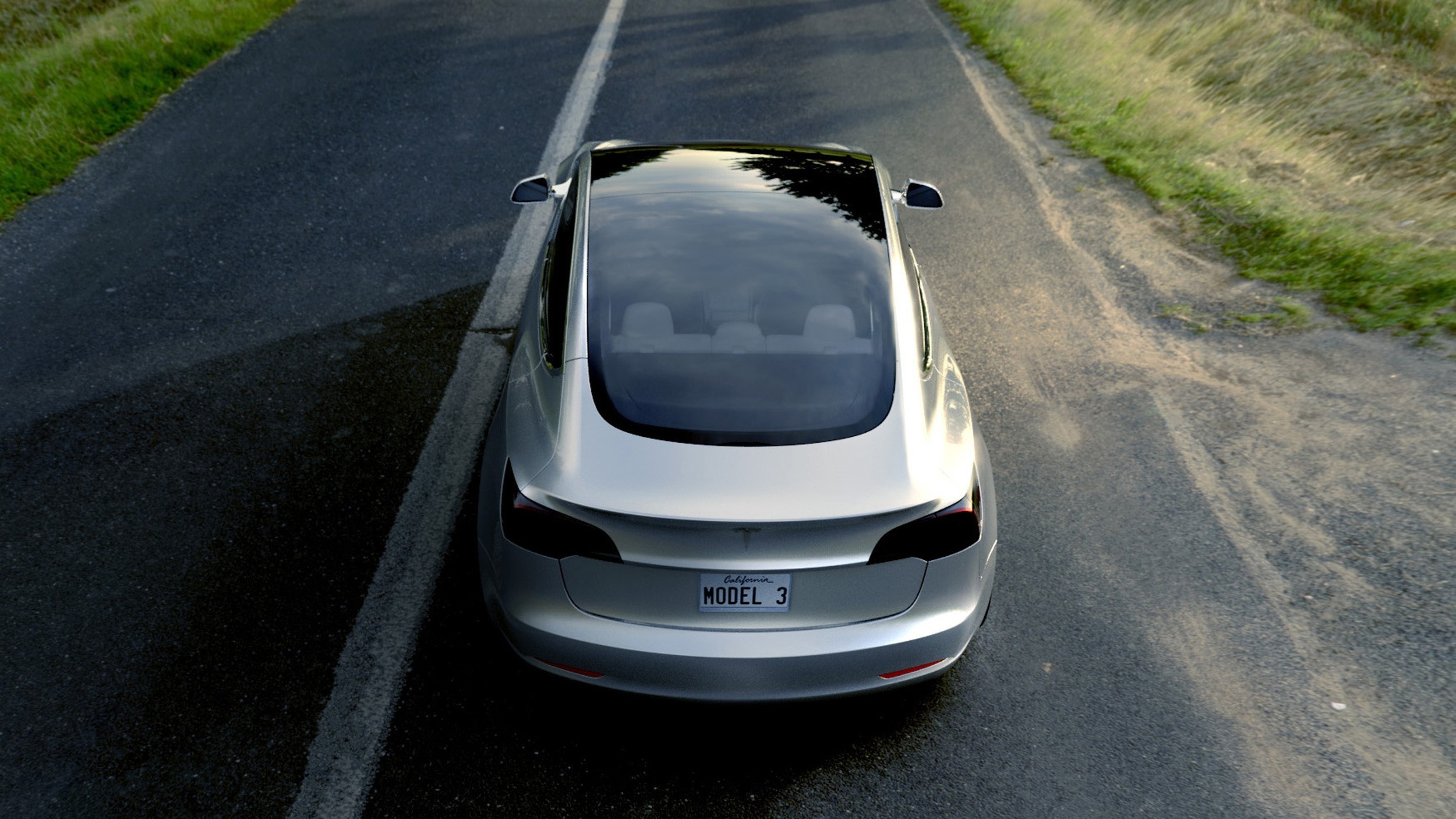
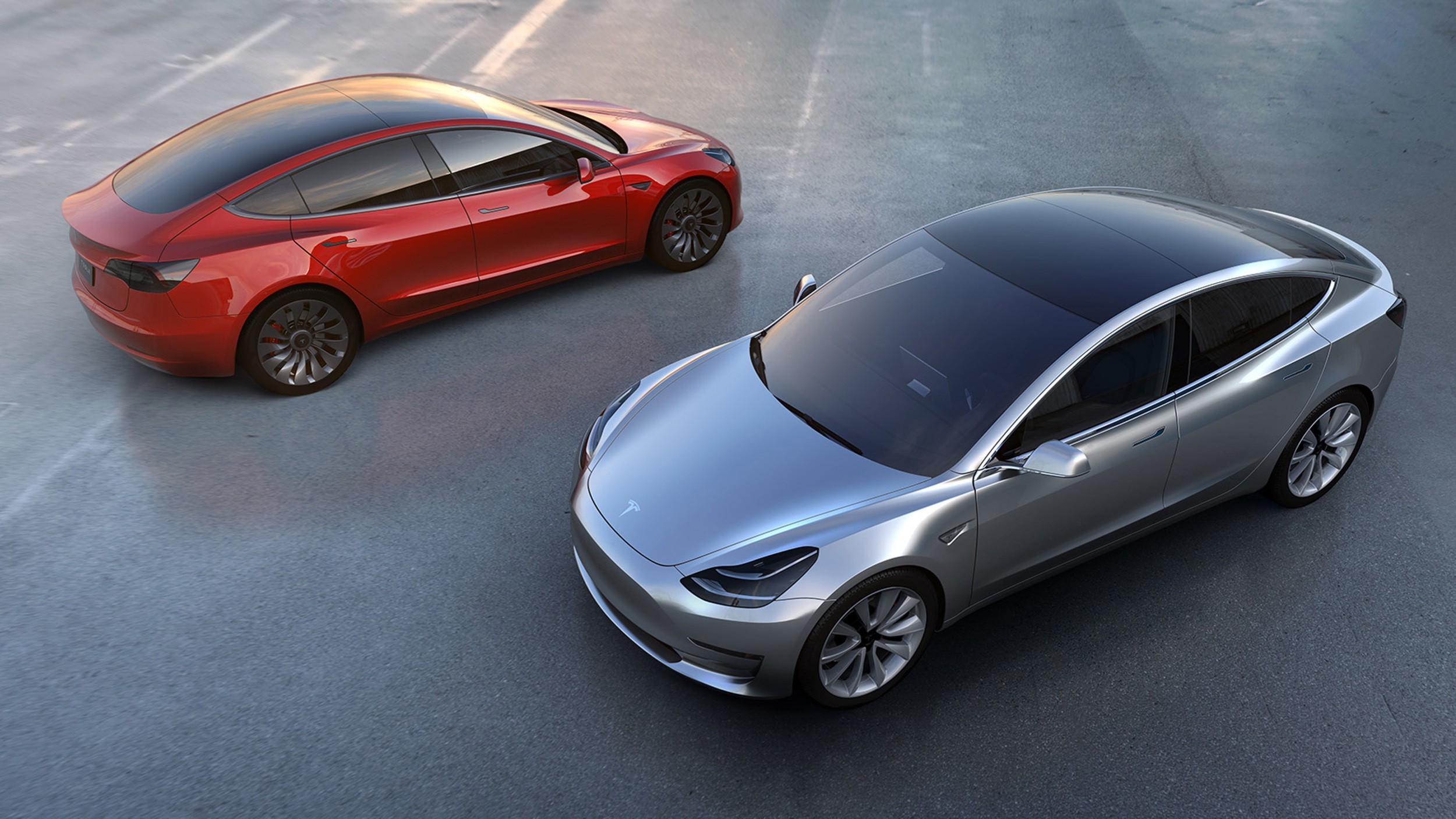
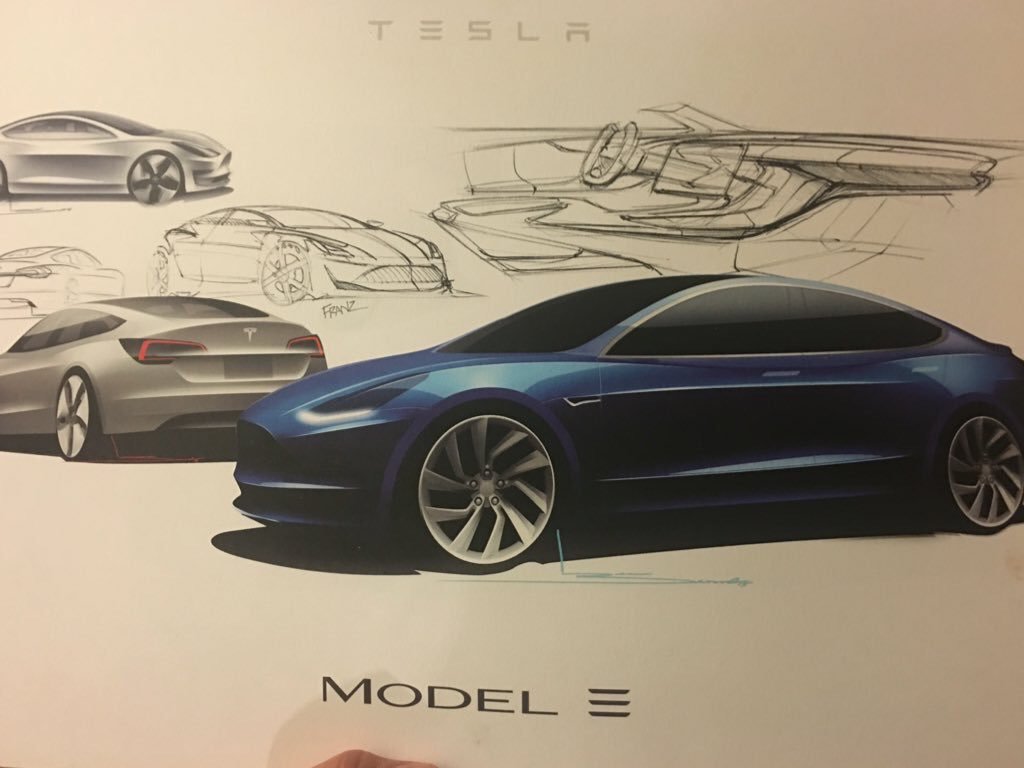
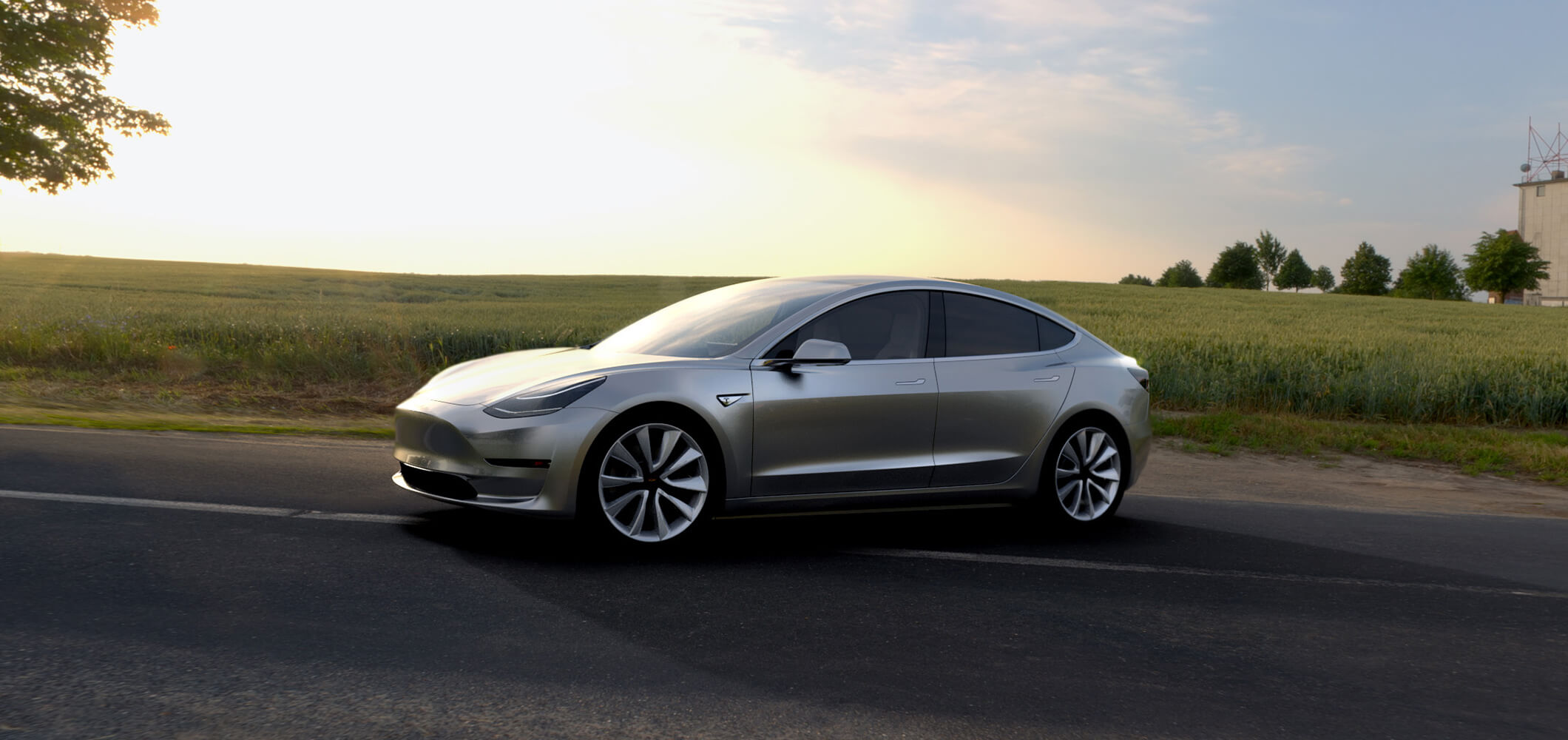
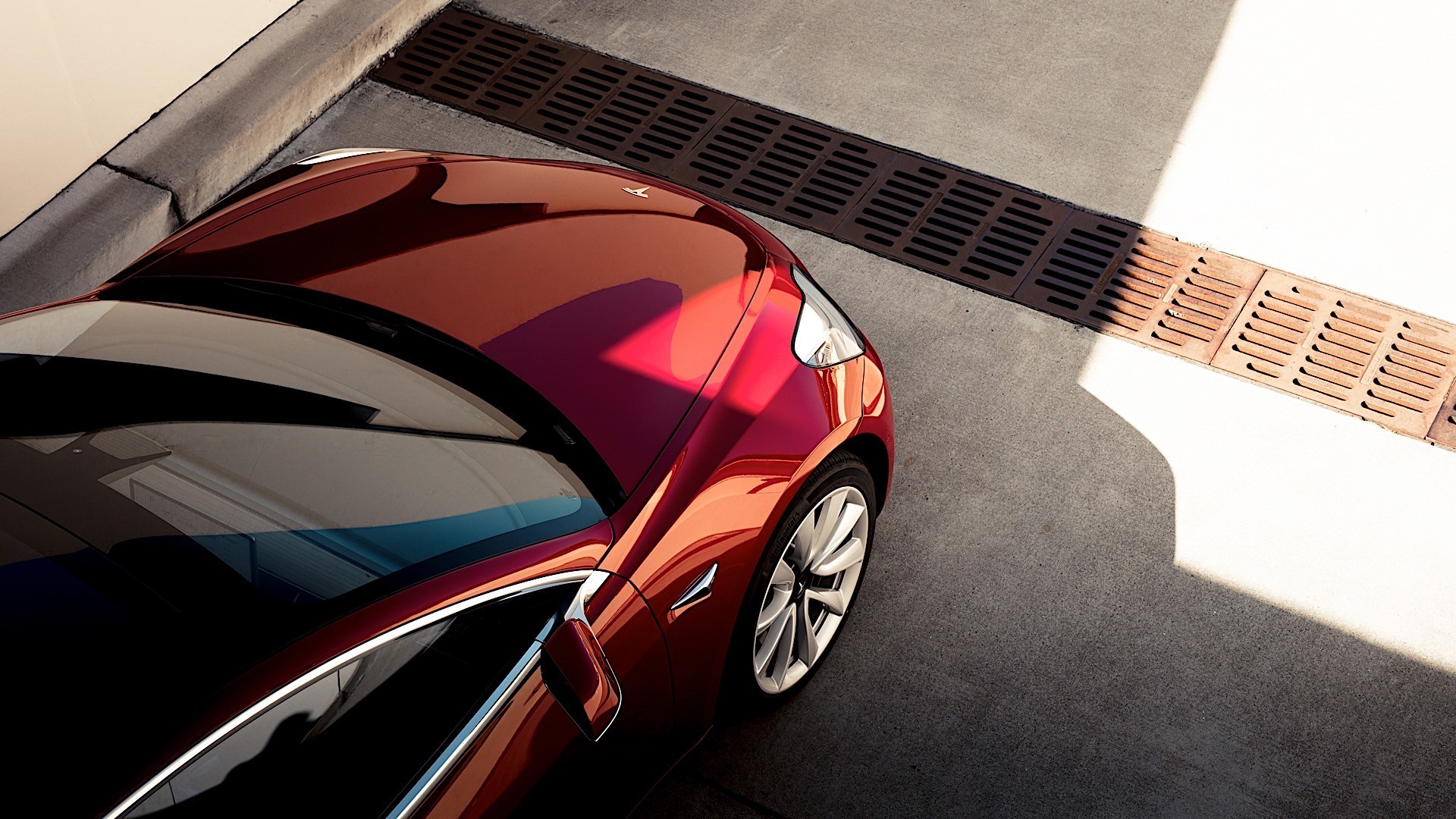
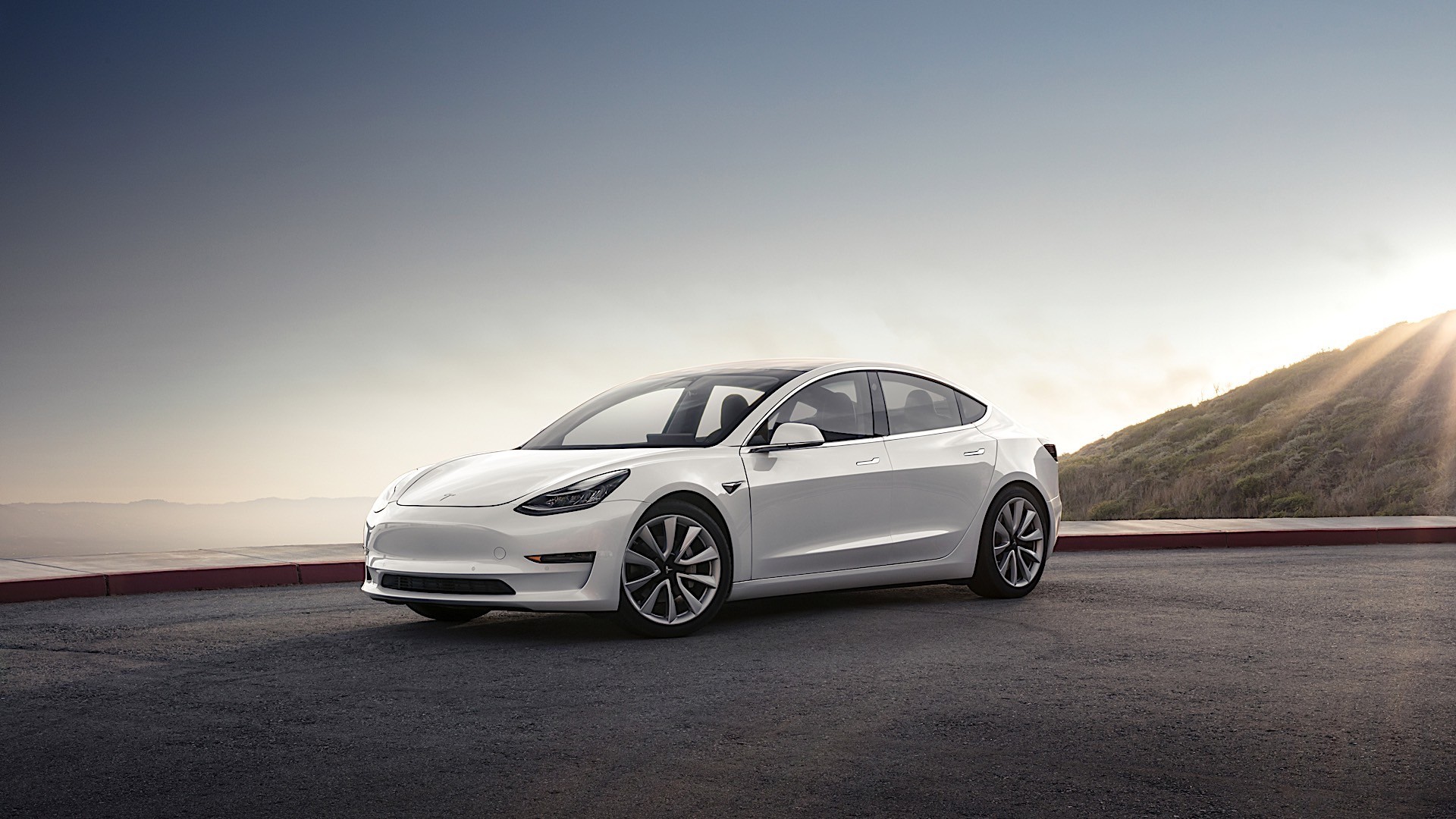
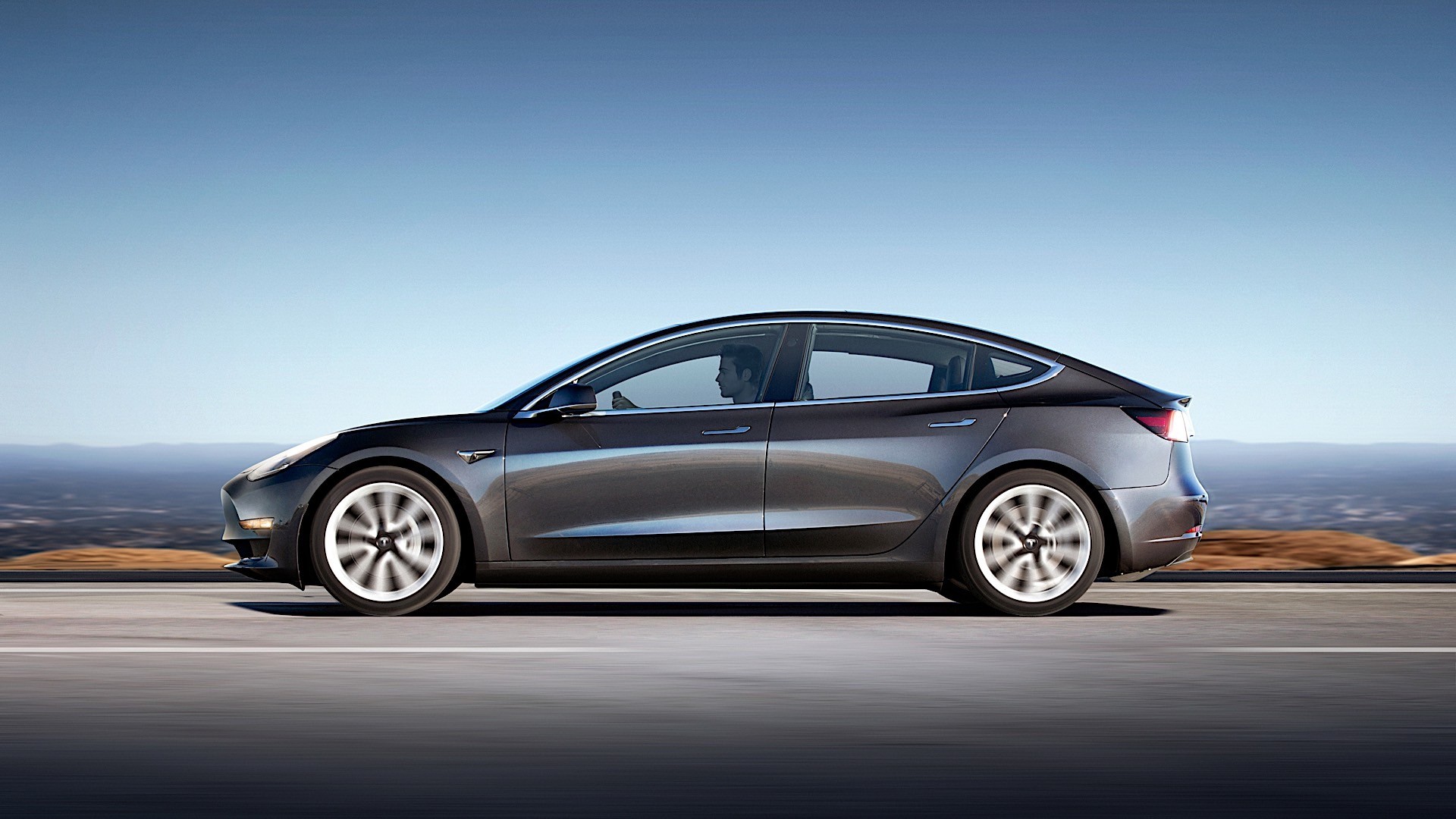
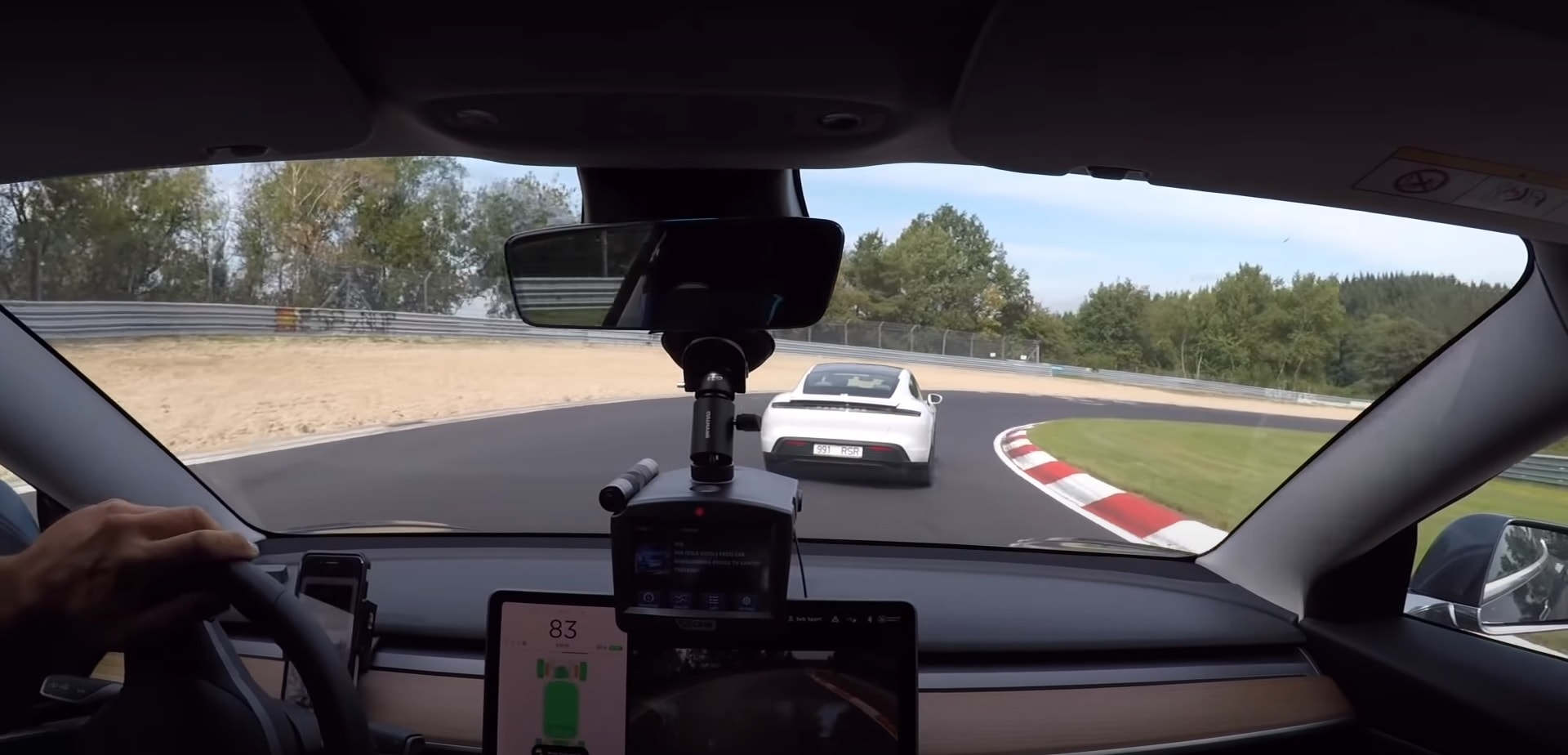
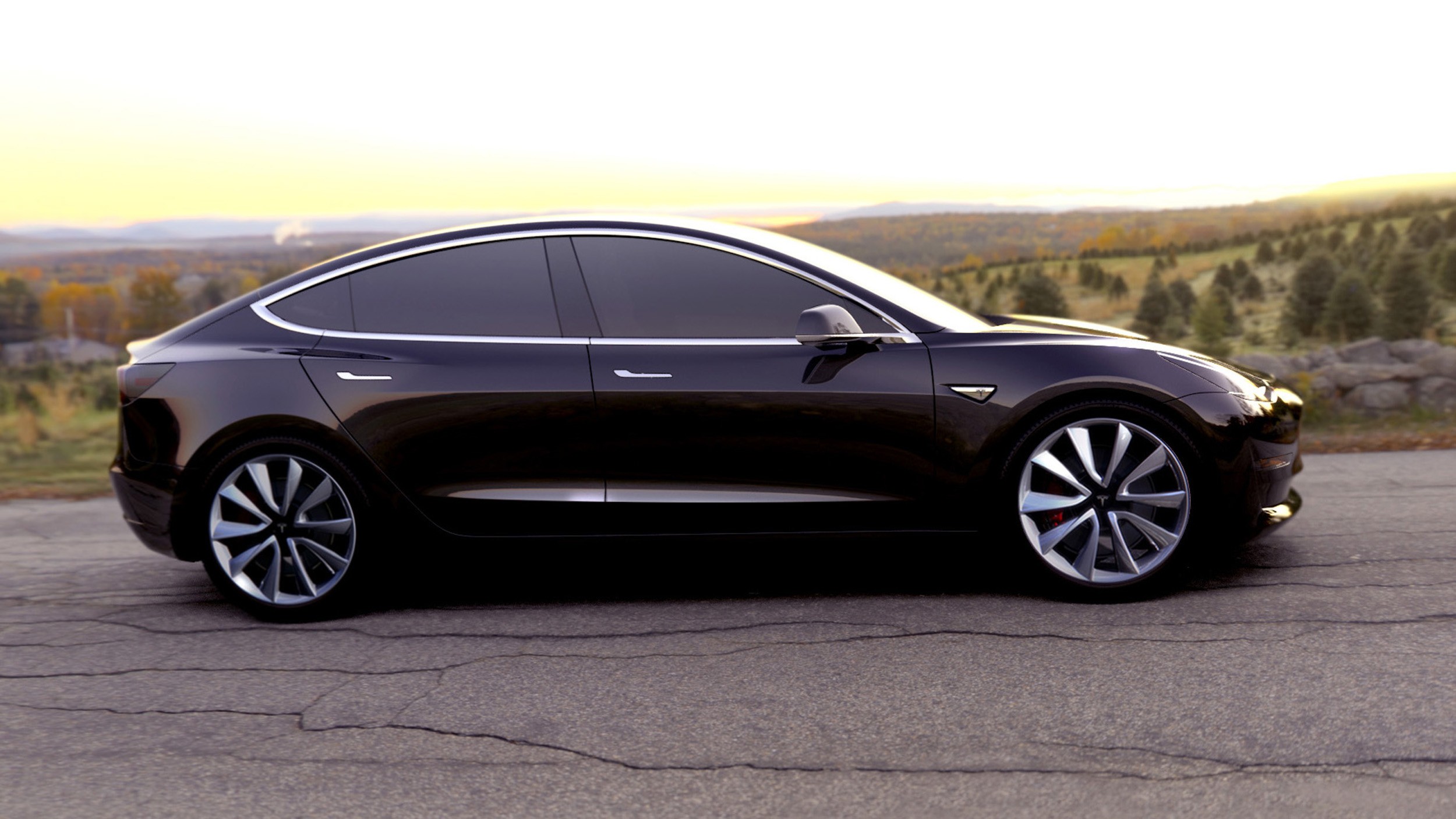
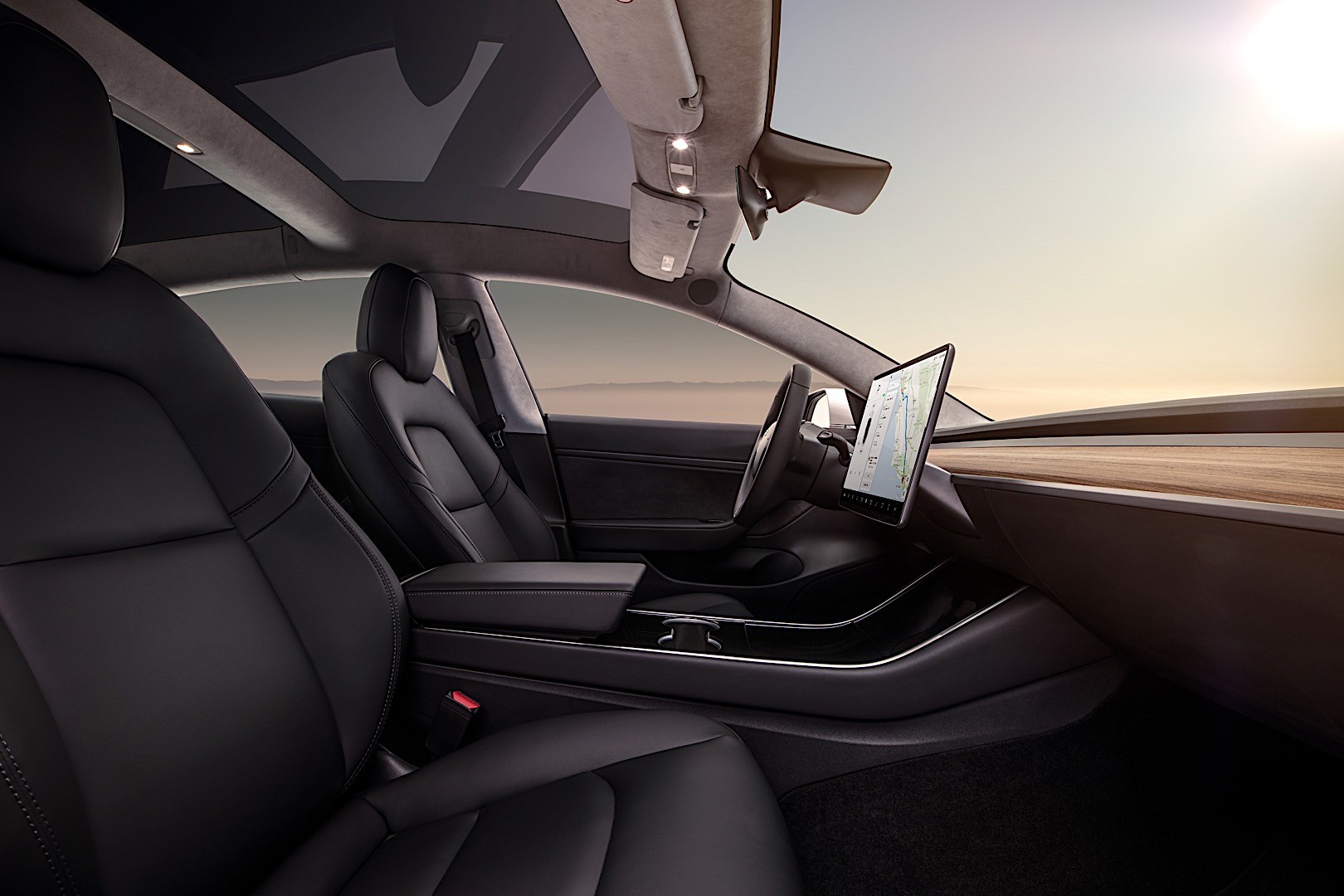
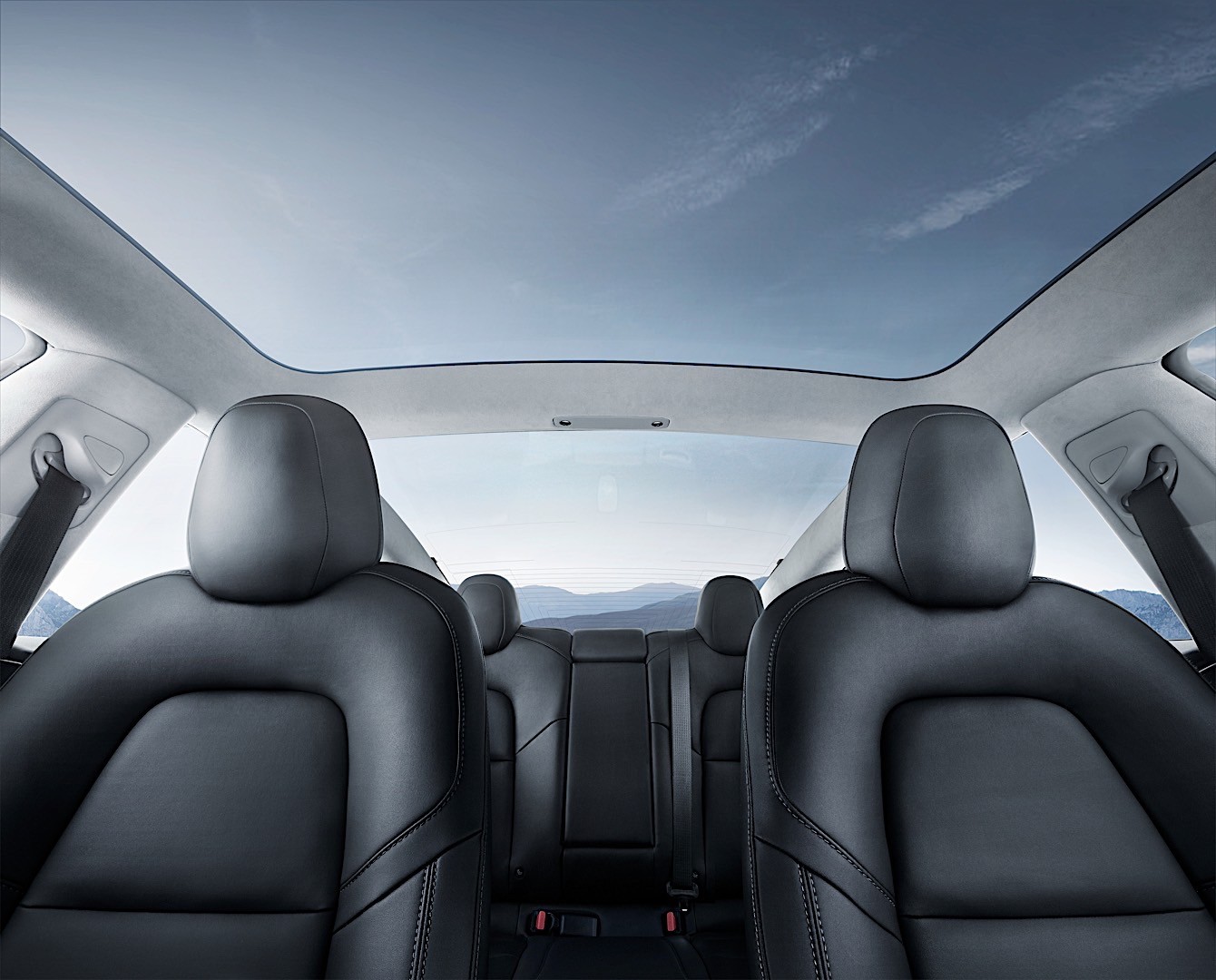
The Tesla Model 3, especially when equipped with the Track Pack (now at V.2), is proving to be quite capable of holding its own on a racing circuit. It's not scared of anything - from the Laguna Seca to the infamous Nürburgring and everything in between.
 21 photos
Lap the Model 3 too many times, though, and you will notice a drop in performance. As the battery pack gets hotter and hotter, the vehicle decides the driver can't be trusted to use the power responsibly, so it limits the amount available of its own will. That's hardly ideal when you're in the middle of an on-track duel with an ICE car and you have a point to make, but it is what it is.
The Porsche Taycan, be it the 4S or the Turbo S version, doesn't seem to have that problem. Granted, while it may not limit power, it should run out of it altogether a lot sooner than the Model 3 due to the limited range (more on that later), but while it's still going, it'll offer a more consistent level of performance compared to the Tesla.

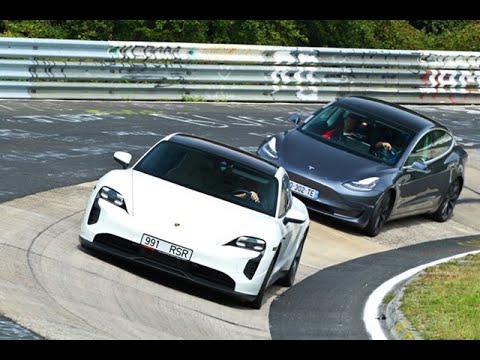
That performance, though, won't be enough to put any sort of distance between the German and American EVs, as this clip shot on the Nürburgring demonstrates. Reading the description of the video, we learn that the two cars have drivers with similar abilities, so that can't be counted as one of the deciding factors.

One that can, though, is the tires the two electric sedans use. The Tesla has Michelins Pilot Sport 4S, while the Taycan is equipped with a set of Hankooks. However, the Tesla driver says the two cars are pretty evenly matched and given their experience on the 'Ring and with racing cars in general, who are we to doubt it? The Model 3 is supposedly offering slightly superior performance on a cool battery pack, but things tend to even out after the first lap on the demanding circuit.
Another interesting aspect that's worth noticing has to do with what we said about the Taycan's range earlier. The short distance it can travel between charges has been one of the main criticism raised at Porsche's EV, but this side-by-side track experience showed something equally surprising and important: driven with this intensity, the Taycan will travel just as far as the Model 3, if not even further. The author says both cars started with 95% battery SOC and, after two laps, the Taycan's read 56% while Tesla's showed 53%. Interesting.
The Next Crazy Adventure Sport: Wingboarding

The Next Crazy Adventure Sport: Wingboarding

Who wouldn’t want to surf in the clouds? An aviation engineer in Alabama is on a mission to find out.

A rendering from Wyp Aviation of a man wingboarding.
When Aaron Wypyszynski was a kid, he used to get home from school, turn on the Disney animated cartoon “TaleSpin,” and watch episode after episode until his parents called him to dinner. In the cartoon, a furry brown bear named Kit Cloudkicker surfed the skies on a small wing while holding onto a tow rope attached to the rear of an airplane. The show only lasted a couple of seasons, and most of the world forgot about it—but not Wypyszynski.
Wypyszynski attended Purdue University, where he earned a master’s in aeronautical engineering. When he finished school six years ago, he took a job as a flight test engineer for a government contractor in Huntsville, Alabama. Now 31, Wypyszynski spends his days making sure new equipment on planes, and the vehicles themselves, perform the way they’re supposed to. It’s very practical work. But he never forgot about Kit Cloudkicker shredding the wild blue yonder—and as he gained expertise in aviation, he wondered if it might be possible to do the same thing in real life. “I always had that in the back of my mind,” Wypyszynski says.
Kit Cloudkicker carving through the sky in the Disney TV show "TaleSpin."
Kit Cloudkicker carving through the sky in the Disney TV show "TaleSpin." (Photo: Disney)
One night in the spring of 2013, Wypyszynski got creative. “I just rolled up some pieces of paper and started playing around with them, and before I knew it, it was like, hey, this actually works,” he says. He observed that a wing could stay upright and glide through the air even with a heavier object (taped, in this case) on top of it. Paper airplanes aside, the concept seemed feasible. “There’s no reason why someone shouldn’t have done this already,” Wypyszynski says.
Done what, exactly? I ask.
“Taken wakeboarding to the sky.”
That is essentially what Wypyszynski is trying to do with the WingBoard (patent pending), a 12-foot-wide, 70-pound composite platform on which riders stand sideways and are locked in via bindings, like on a snowboard or wakeboard, while getting towed behind a plane at 110 mph, 2,000 feet off the ground. Riders will don goggles and a helmet, and perhaps a spandex or leather suit, to protect against the wind and cold.
Wypyszynski has spent more than $25,000 building and testing small-scale, remote-control prototypes, and he’s up to a model that is 40 percent the size of the hoped-for production model. It uses a 31-inch, 6.5-pound plastic rider that Wypyszynski and his cohorts call “James.” If the test flight ends with James and the board intact, and no unanticipated movements or oscillations, Wypyszynski deems it a success. It’s unclear exactly how much maneuverability a rider would have—James just stands there, strung along behind the plane. But the team recently executed a barrel roll with a remote control plane and James followed behind it, no problem.
“There’s no reason why someone shouldn’t have done this already."
Wypyszynski says he wants to attach WingBoards to freestyle airshow planes and let riders do loops at up to 170 mph. Such forces won’t rip off their arms because the tow cord would attach to a body harness (instead of a rider’s hands), as well as to the board. In an emergency, riders would be able to eject and release their own parachute as well as the WingBoard’s. (If they couldn’t release the board’s chute, someone on the plane would be able to do it remotely.)
If this sounds a little like the old X Games “sport” skysurfing, it’s probably because that’s wingboarding’s closest relative. But while skysurfers simply plummet, wingboarders would plane, a far more attractive way to fly, Wypyszynski says. Since a short story aired on CNN earlier this month, Wypyszynski says he has been receiving “three emails a day from people wanting to be test pilots, and two a week from those very well qualified and internationally recognized.” The latter list includes wingsuit pilot Brandon Mikesell and Mike Swanson of the Red Bull Air Force.
“Right now we are at a major turning point in human flight,” Mikesell says. “Wingsuits are getting extremely efficient, and a lot of ‘firsts’ have already been accomplished in this aspect of flying. In my opinion, wingsuiting has hit a very pivotal point, and something needs to continue to push human flight to the next level. And the WingBoard is definitely it. Who wouldn’t want to carve around clouds like a real-life cloud surfer?”
Because the WingBoard will weigh less than 155 pounds, the FAA considers it an ultralight glider, Wypyszynski says. “They say, basically, as long as it’s under 155 and there’s only one person on it, we don’t care what you do with it.”

That applies to recreational use, anyway. Wyp Aviation, Wypyszynski’s nascent company, plans to sell new WingBoards for $10,000 and build between 25 and 100 per year, starting in 2017. If they find their way into drop zones and resorts for rental use, the FAA might have more to say about them, Wypyszynski says. His big-picture goal is to manufacture the boards and sell them to individuals and companies, while also promoting airshows and events where they would be featured.
Of the $270,000 Wypyszynski says he needs to complete his development, around $170,000 is for flight testing. He’s using a helicopter to get the WingBoard up to speed because it’s faster than a plane.
Will it all be worth it? Its creator thinks so.
“I’m 100 percent confident this will be viable and will work,” Wypyszynski says. “But the only way you can convince the nonbelievers is to go out and do it.”

This Camper Fits Most One-Ton Trucks

Imagine for a moment that this is the last month of the year to have some outdoor fun. It kind of is really. Because you and your family have been cooped up in the house for so long, you decide to take a week or two outside the city and live in the great outdoors. But to do so, you’ll need to be prepared.

This Camper Fits Most One-Ton Trucks

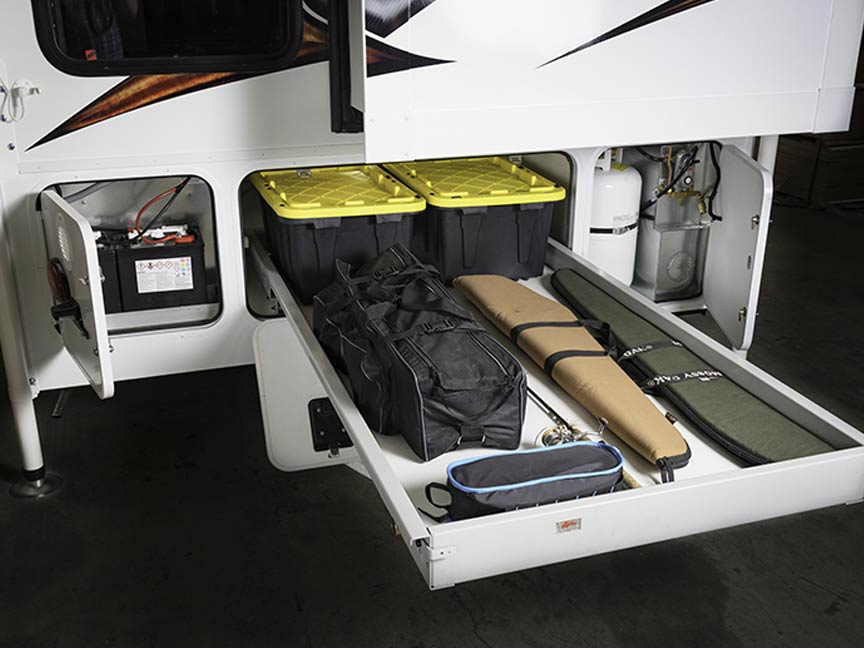
Mammoth CamperMammoth CamperMammoth CamperMammoth CamperMammoth CamperMammoth CamperMammoth CamperMammoth CamperMammoth CamperMammoth Camper
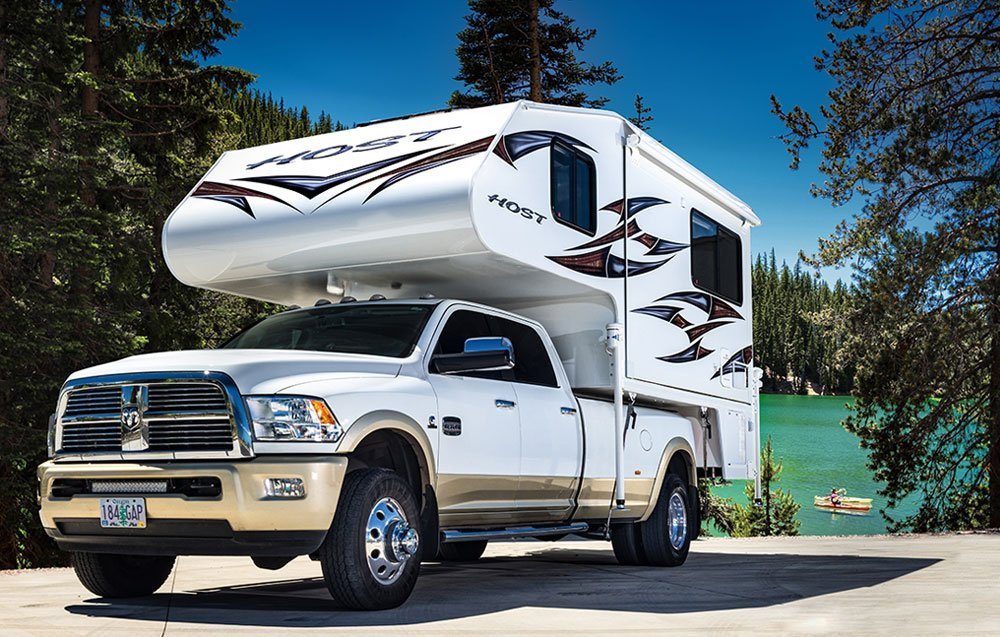
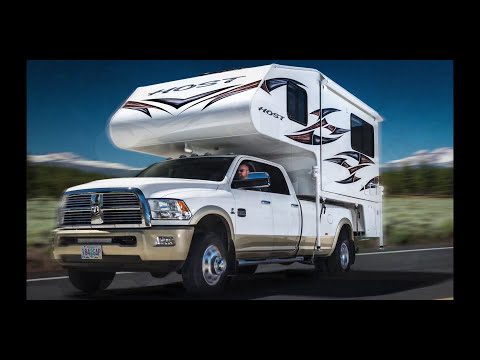
This is it. One of the best rated campers from Host. She’s known as the Mammoth and offers enough room and luxury to keep you happy for a good two weeks anywhere, really. The beauty behind this camper is that is cam be fit on most one-ton trucks and is roomy enough to sleep a family of four comfortably.

You’ve probably heard of Host before. They offer one of the most accessible and comfortable slide-out campers around. The previous models such as the Cascade and Yukon showed us what Host can do, and the Mammoth is no exception.


Her outside shell is built using the same techniques as the other campers. An aluminum structure offers a light yet strong frame on which to lay the fiberglass panels. As insulation we find vacuum bonded foam walls, floor, and ceiling.


This camper offers three slide-outs which allow for several options and styling combinations. Being a custom camper, the team allows you to influence the interior design. But if you feel you don’t want to bug yourself with any of this, you can pick from one or two design packages.

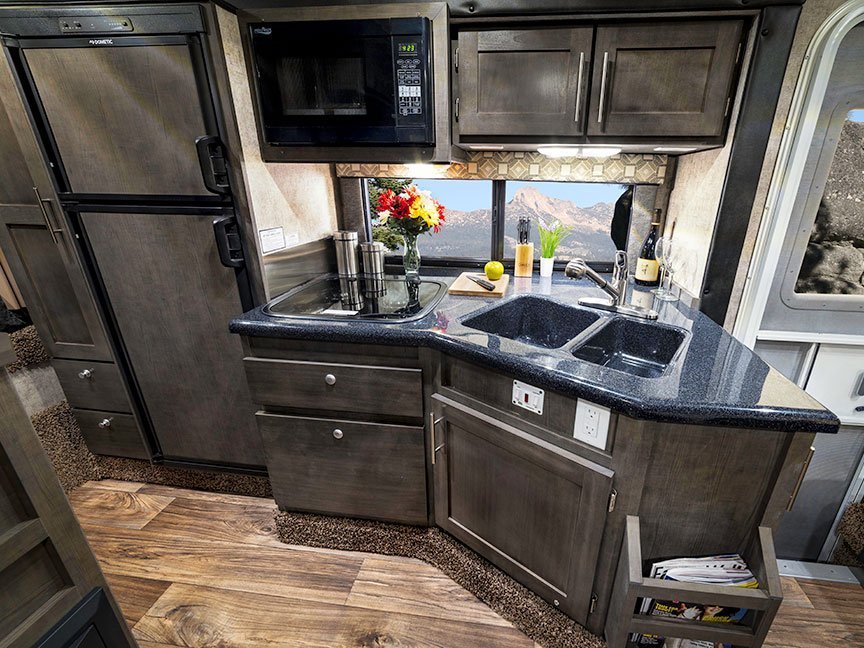
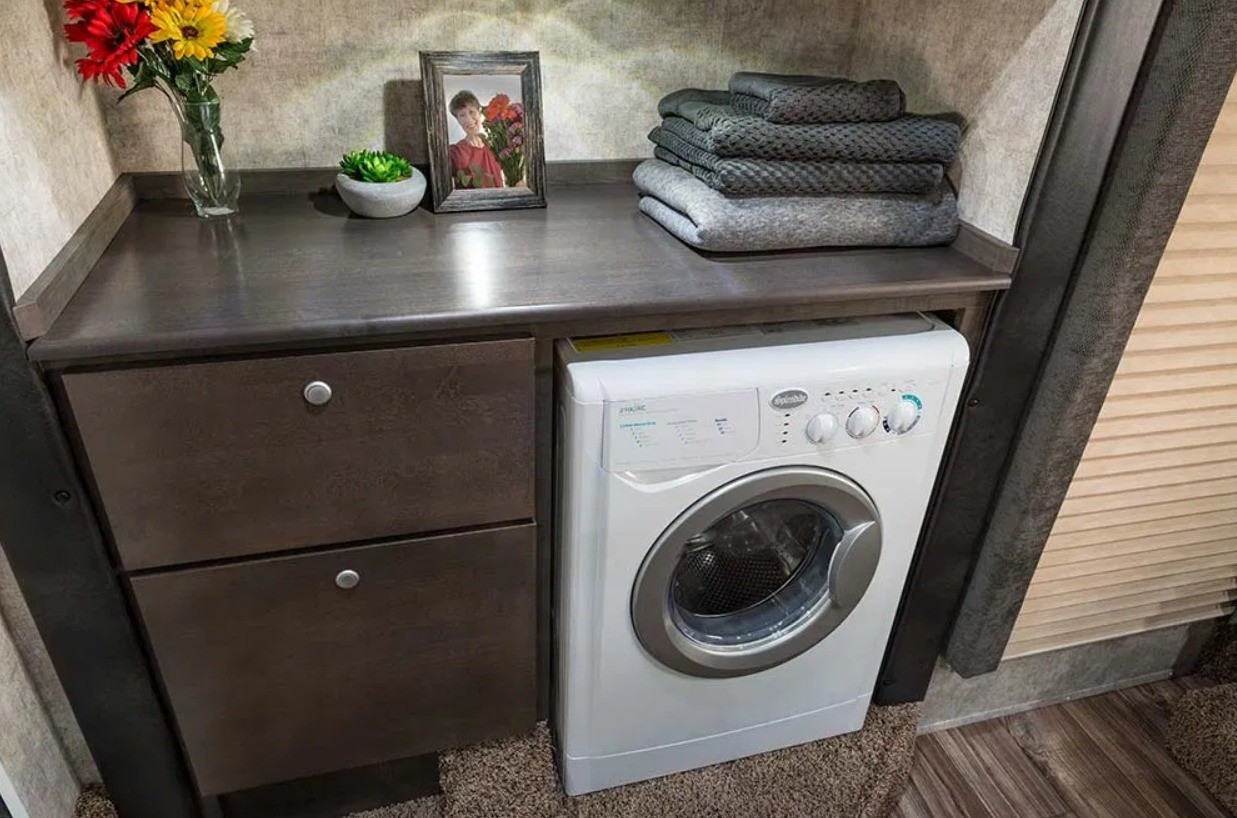
As with most Host products, this one to is full of amenities. The kitchen alone is basically a full-sized kitchen. You’ll find a three-burner stove, ready with microwave and even an oven if you wish. A dual-bowl sink and mobile faucet are offered to make your cooking and cleaning easy.

Surfaces are once again with the classic Grani-Coat solid surface counter-tops host is known to use, but also incorporates a slide-out cutting top. To take care of any of your goods, this space is furnished with a full-size fridge and freezer and enough cabinets to stock up on all the snacks, veggies, and cookware you may need on your trip.

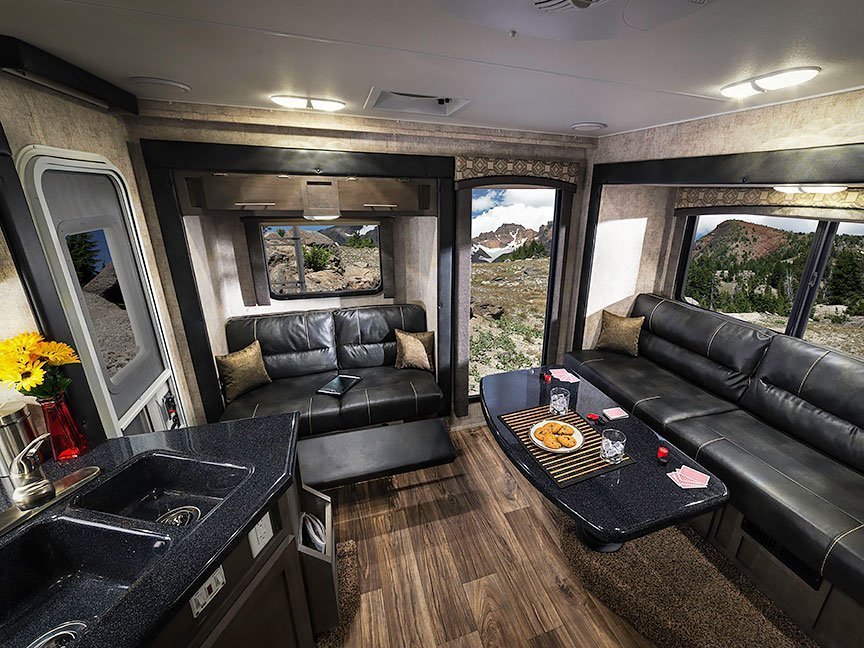
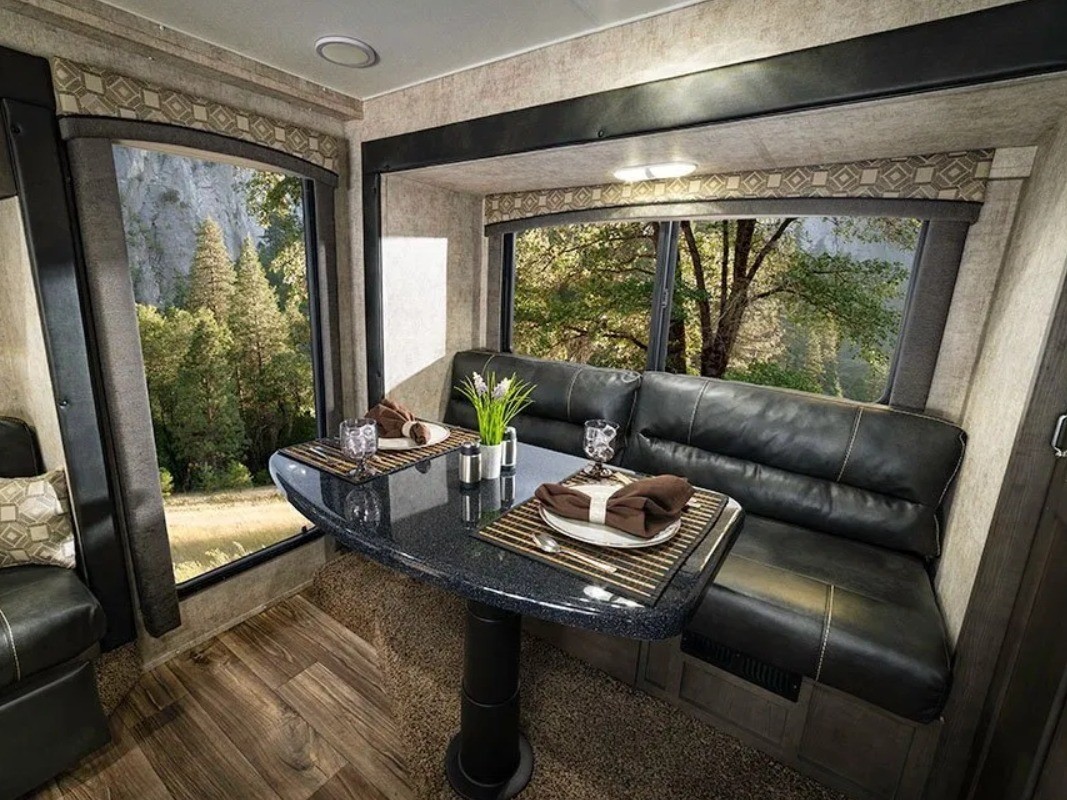
What sets the Mammoth apart from the other campers is its incredibly spacious dining room and entertainment center. A large table sits in front of a leather booth suitable for 3-4 guests, and off to the side seating for another two. Ther beauty here is that the dining table is height adjustable and some seating transforms into extra sleeping quarters.

In front of this space and acting as a sort of wall for the bedroom, is the entertainment center. Here we find space for a TV and an audio system with CD, AM/FM capabilities, and Bluetooth as well. Underneath we find storage space suitable for video game consoles and other hardware.
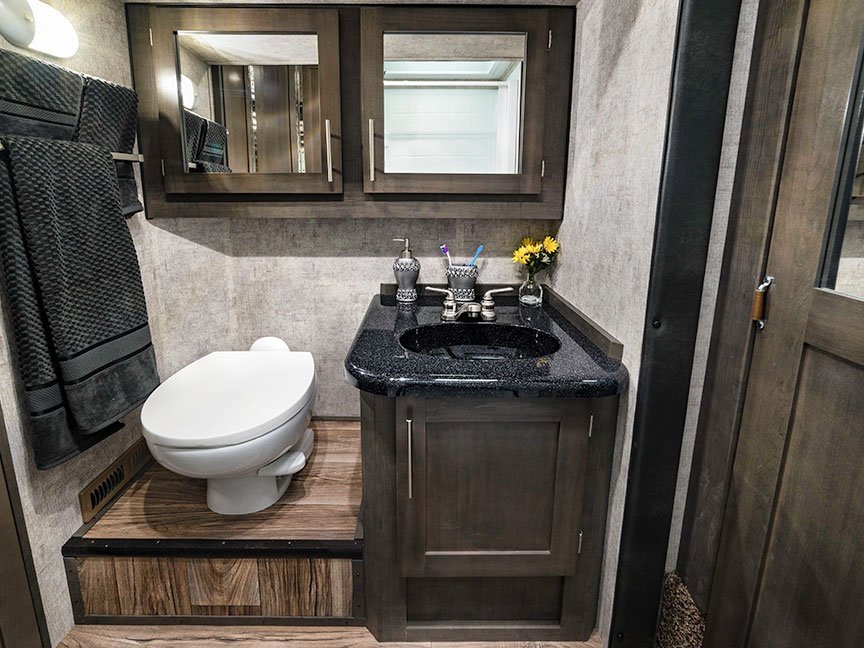
If you need to take a shower or just need to do the morning biddings, a full-sized shower is ready and separate from the toilet and sink. If needed an outside shower is also available.
The overhead cab compartment houses the bedroom of the Mammoth. A standard queen option with the ability to upgrade to a king is available. We can also find cabinets and closets for personal belongings.

Aside from just these main features, Host offers a plethora of options that I can't even fit in one, two, or even three articles. But to give a taste, an option for side awnings and outdoor BBQ is available. GPS with satellite dish and 24-inch flatscreen TV can also be had. And that’s only three of 40 or so options, excluding the Smokey River and Pecan packages.


It’s for this reason that Host has been running strong for over 20 years. Check them out, maybe you’re their next client.

Assuming you need any more convincing that electric vehicles at the very least deserve a fighting chance, here’s a story for you: one man worked for two years to convert his classic Porsche into an EV. Classic 1973 Porsche 914 Turned Electric Is a True Labor of Love

Assuming you need any more convincing that electric vehicles at the very least deserve a fighting chance, here’s a story for you: one man worked for two years to convert his classic Porsche into an EV.

Classic 1973 Porsche 914 Turned Electric Is a True Labor of Love

1973 Porsche 914 converted into EV in 2-year DIY project1973 Porsche 914 converted into EV in 2-year DIY project1973 Porsche 914 converted into EV in 2-year DIY project1973 Porsche 914 converted into EV in 2-year DIY project1973 Porsche 914 converted into EV in 2-year DIY project1973 Porsche 914 converted into EV in 2-year DIY project1973 Porsche 914 converted into EV in 2-year DIY project1973 Porsche 914 converted into EV in 2-year DIY project1973 Porsche 914 converted into EV in 2-year DIY project
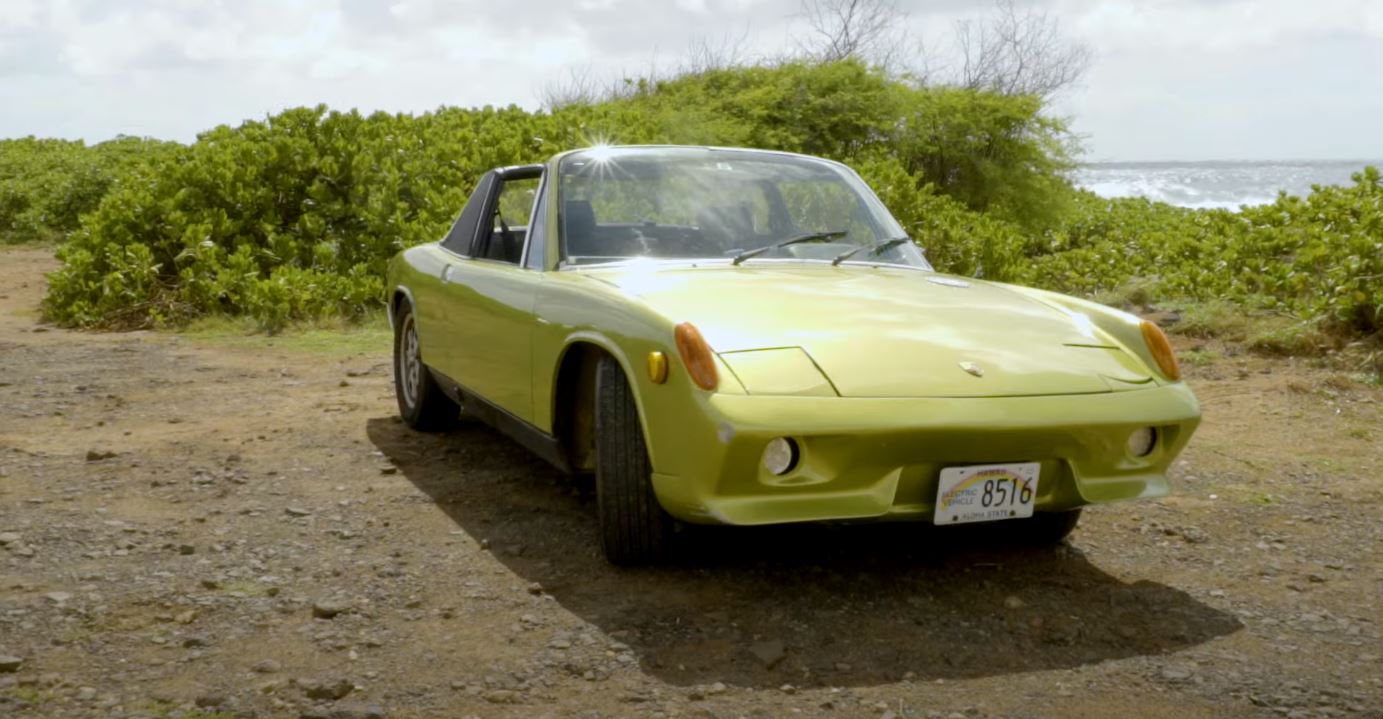
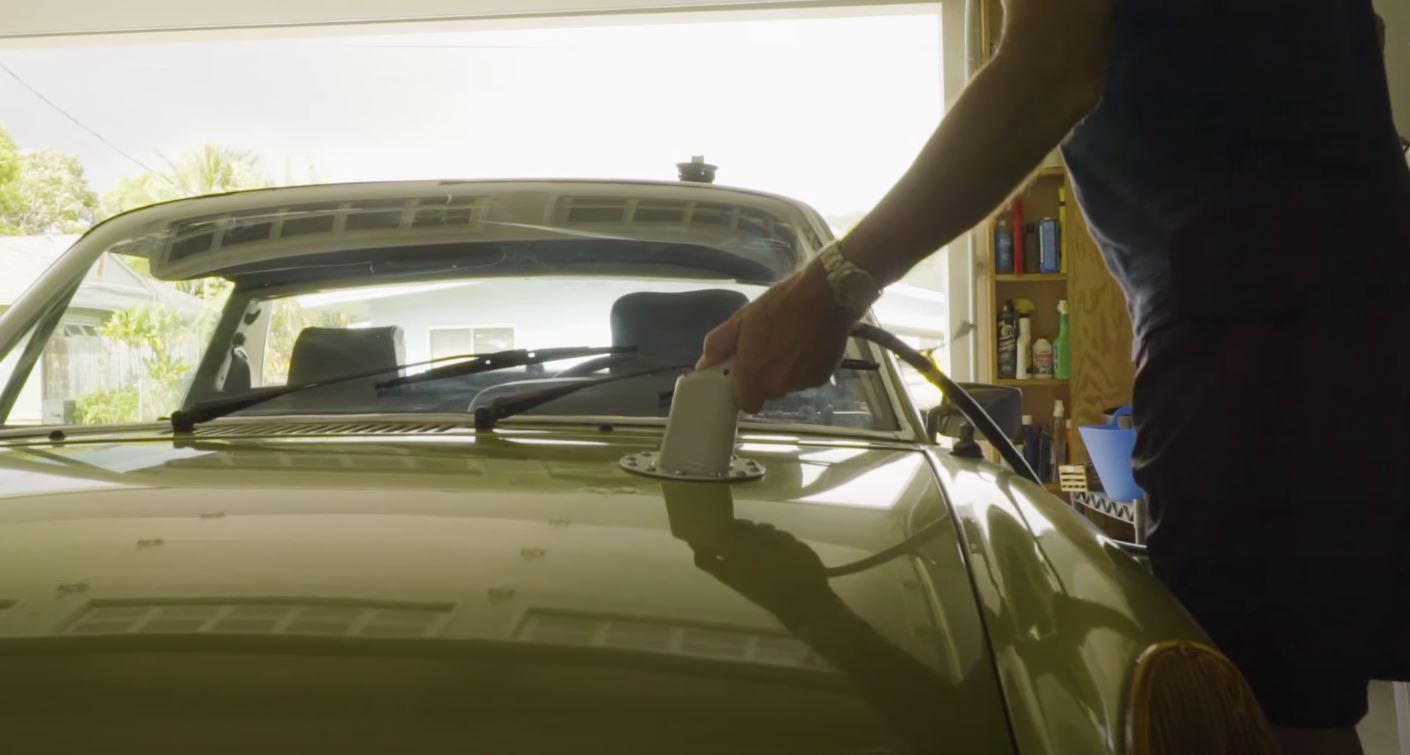
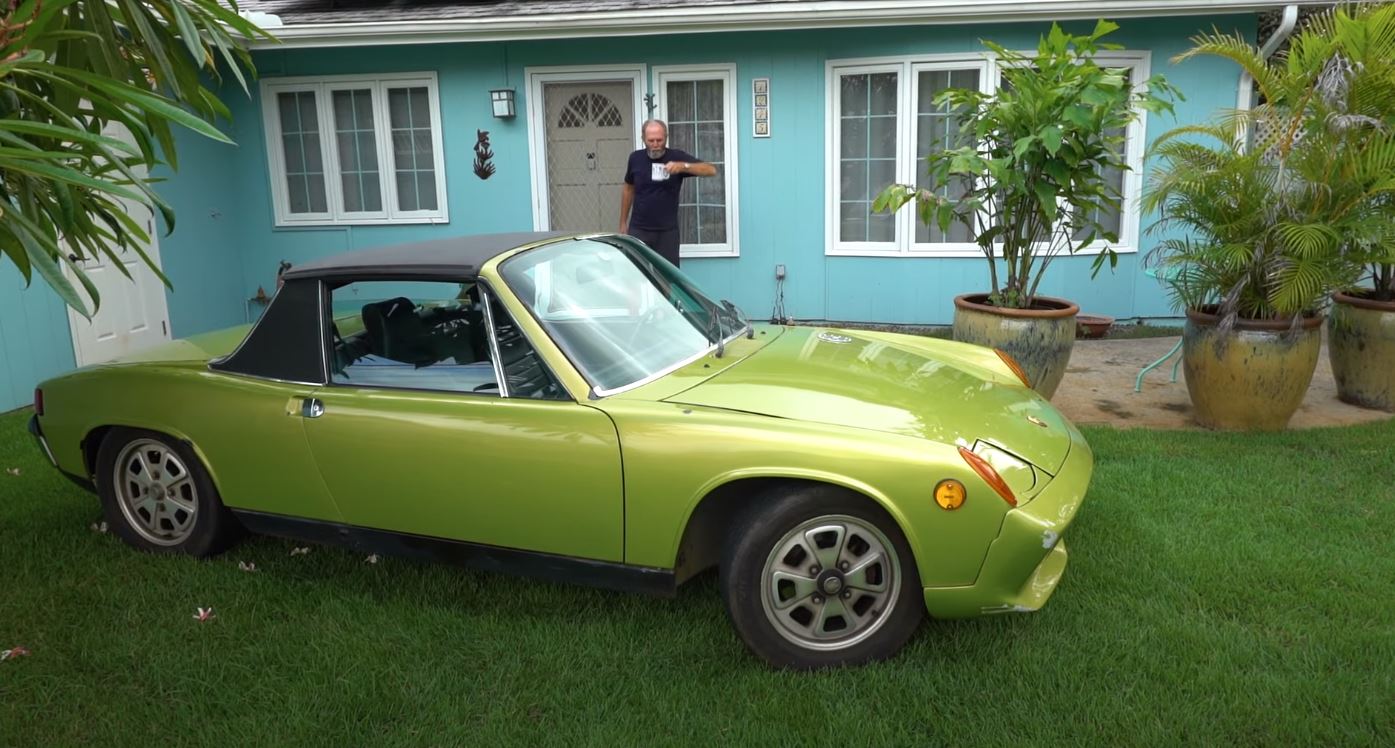
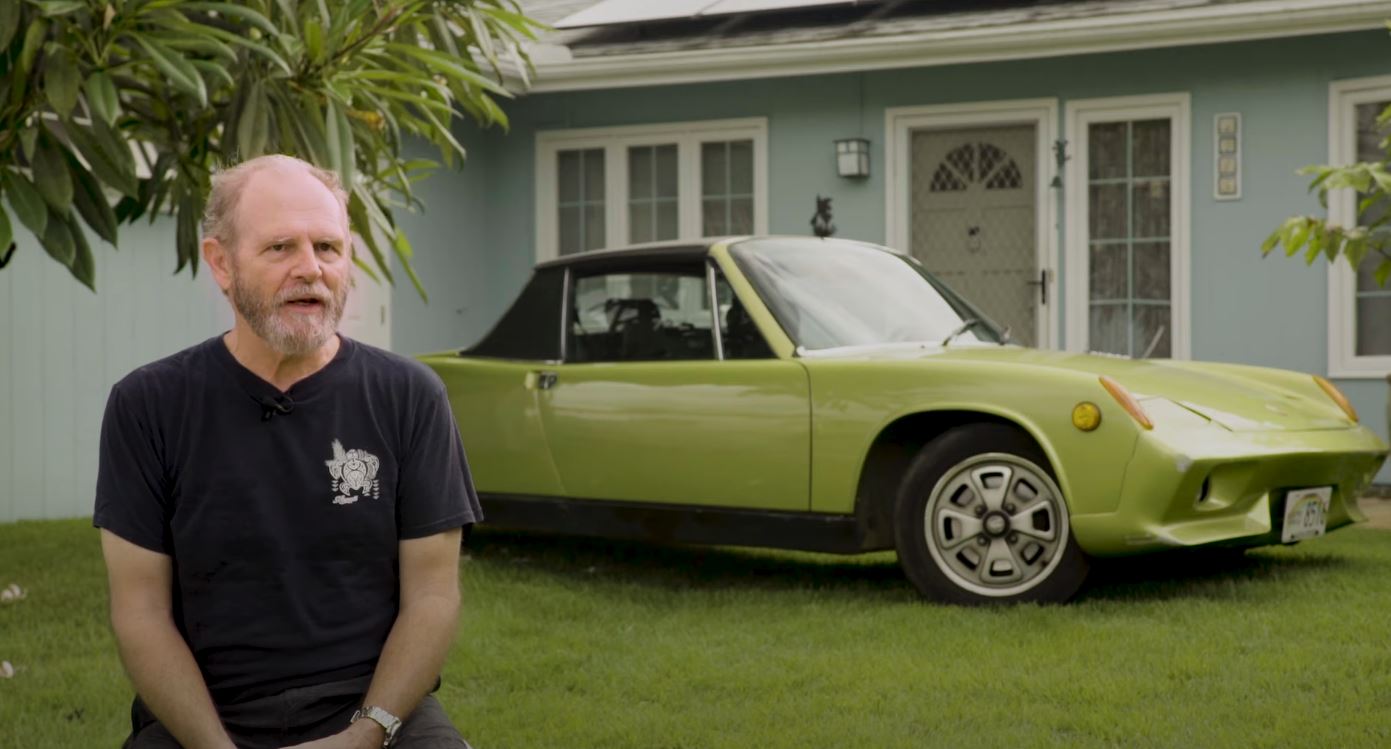
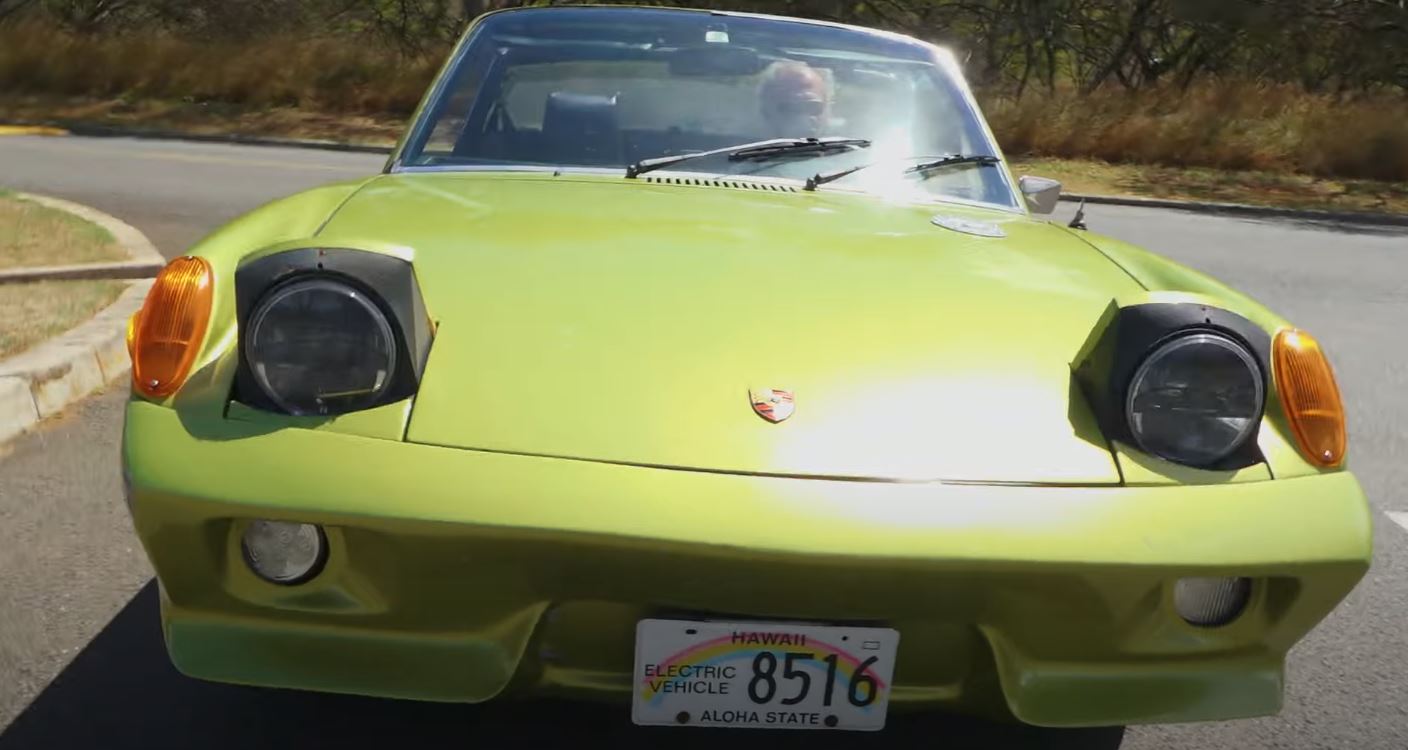
Mark Bush is a retired nurse and actor who moved from California to Hawaii sometime in 2015. He bought one of the cheapest (and less popular) Porsche models for a steal and then set out the ultimate goal for himself: convert it into an electric vehicle.

Porsche 914s are popular cars for conversions, both because they’re lightweight and comparatively affordable. Bush, for one, paid under $2,500 for this one, though he invested a great deal of time and effort into completely restoring it, while also converting it. His wasn’t a project for fame or money, but a labor of love, as he explains in an interview with Barcroft Cars from earlier this year.
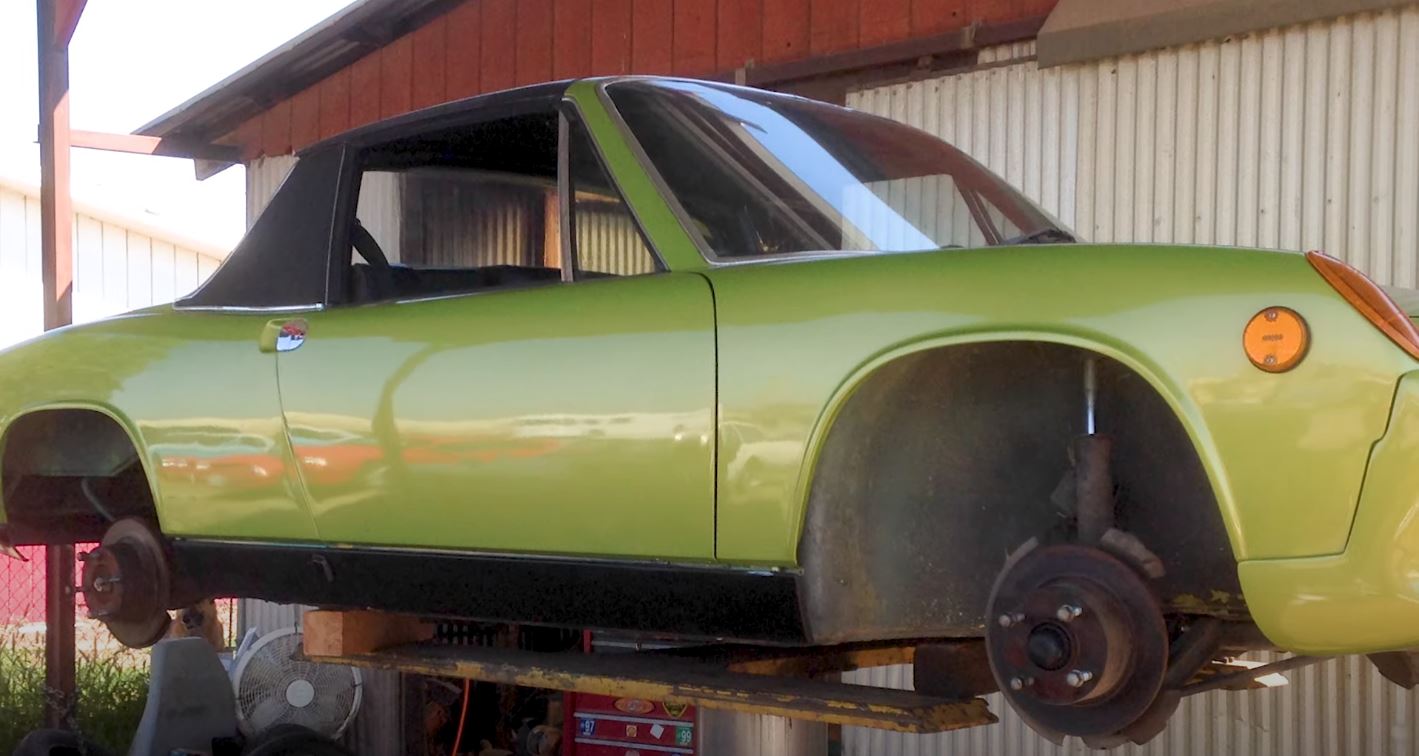
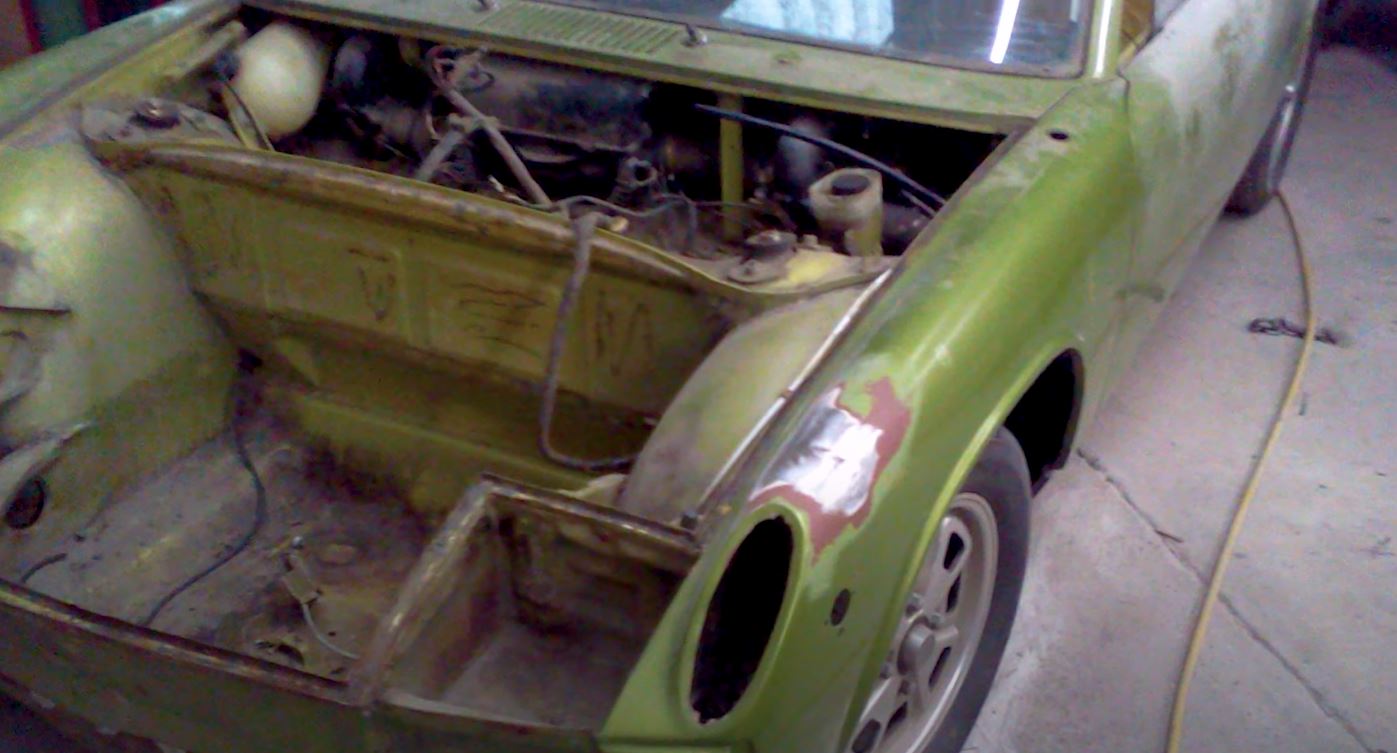
Designed by Porsche and VW, the 914 was sold between 1969 and 1976. Bush’s is a 1973 model but it’s not “completely spick and span” because, after the conversion, he’s been using it as a daily driver. The conversion itself took two years of constant work, with Bush taking time off work so he could tinker in the garage. That said, he wouldn’t say it was a chore, since he loved every step of the way.
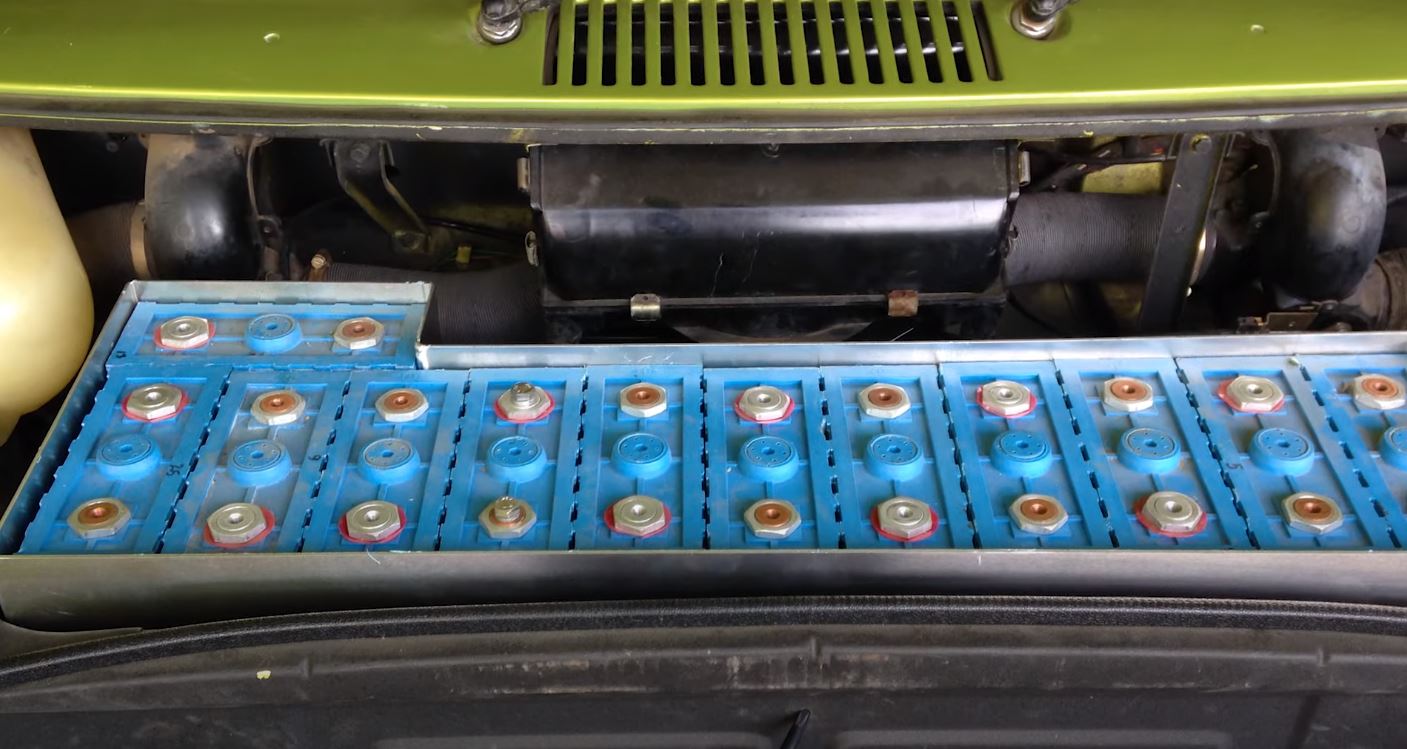
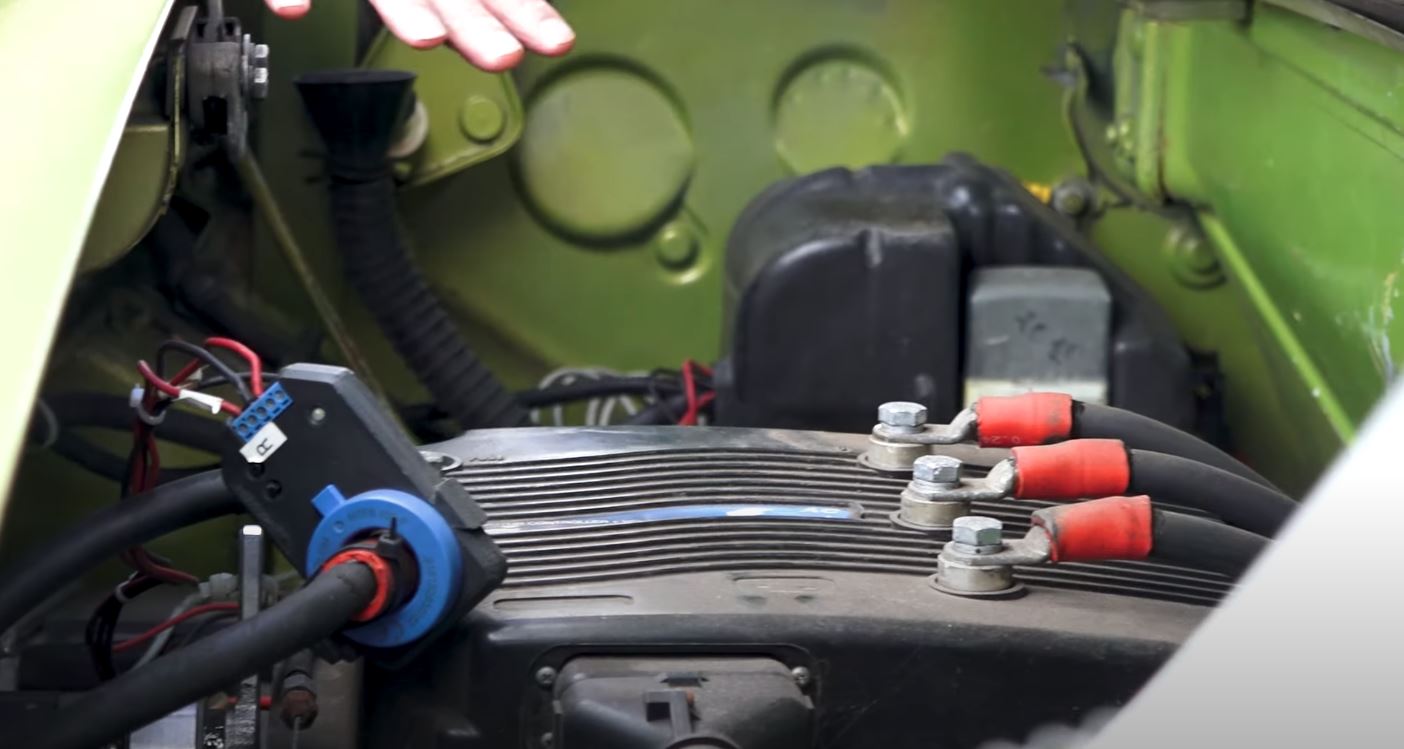
For the conversion, Bush tore the Porsche apart. He then removed the engine and the drivetrain, the exhaust, and ultimately every part of the car, before putting it back together again. He put in an HPEVS AC50 motor instead of the VW internal combustion one, and a 126v battery pack in containers he had a friend make for him on commission.


Because Bush likes the experience of driving stick, he was adamant about keeping the original Porsche transmission. So he made sure his brand-new EV had manual five-speed transmission.
This all-electric Porsche can hit top speeds of 175 mph (281 kph), with a 0 to 60 time in some 6 seconds, and has a 100-mile (160 km) range on a single charge. These may not be very impressive figures for today’s EVs, but considering they come with a 1973 car and at a fraction of the price, they’re actually quite neat.

This is one of the most important lessons Bush has learned from the experience, he says. The biggest was that he loved to tinker and breathe new life into a gas-guzzling classic, but the second best was that everyone should give EVs a try. For that to happen, they would have to be more price-accessible or, at the very least, for people to be willing to put in the work for a conversion. You don’t even have to be an engineer for that, he swears.

“The acceleration on them is pretty quick,” he told Hawaii Public Radio in an older interview. “And the fact that you can drive a vehicle and not be part of the problem. People can realize you don’t have to have a Tesla or Leaf. You can have any vehicle and make it an electric vehicle.”
Along the way, you may even come across your next best friend.
“I know every sound, every little nuance of it because I had it completely apart and put it all back together again. This car has been just an amazing friend, almost. I think everyone should have an electric vehicle,” he says in the video below.

For anyone but a gearhead, this is a romanticized take on this DIY story. But to have such an old car still being used on the daily, enjoying a second lease at life, with zero pollution, is an admirable feat.